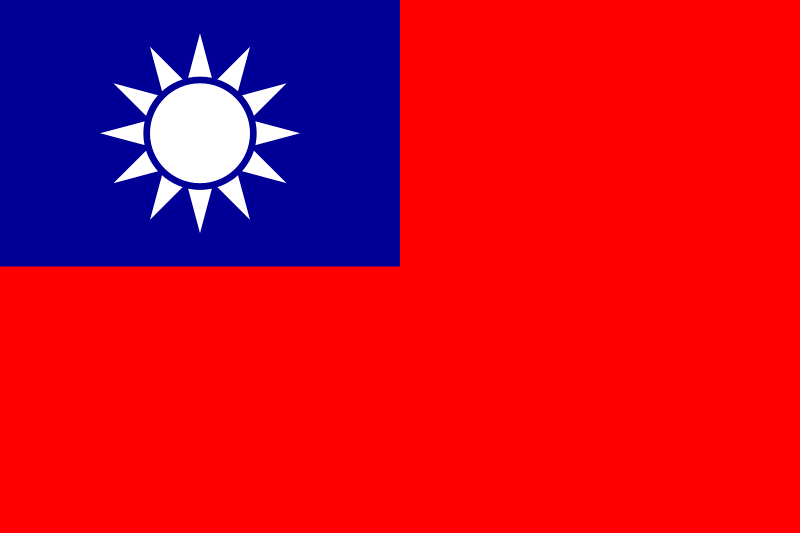
When Americans see the word, “Republican”, we immediately think of a political party. There are Republicans, Democrats, and Independents. In this post, the term “Republicans” refers to the people who wanted to change China from a system ruled by emperors and their families to a “republican system” where elected representatives of the people controlled the government. Many historians call the period between 1911-1949 in China, the “Republican Period” since the official English name of China at that time was “The Republic of China”.
Before the Republican Period, China was ruled by a succession of dynasties. Some dynasties, like the Han lasted for centuries. Others, like the Qin, only a few years. What all dynasties had in common was that they were lead by emperors who ruled with a “mandate from Heaven”. In Chinese, the word for revolution (革命 gé mìng) literally means “removing the mandate”. When an emperor no longer had the” mandate from Heaven,” the dynasty was toppled and a new dynasty began.
The Qing 清 (aka Ch’ing or Manchu) Dynasty was the last imperial dynasty in China. A coalition of anti-Qing forces from both inside and outside of China culminated with the Wuchang Uprising in Hubei on October 10,1911, forcing Puyi (溥儀 Pǔ yí), the last emperor of China to abdicate his throne on February 12, 1912 at the ripe old age of six.
The Qing Dynasty began when the Manchurians defeated the Chinese Ming armies in 1644. At that time, Manchuria was not considered a part of China, so China felt that it had been occupied by a foreign power. Early emperors of the Qing were strong, but by the beginning of the 19th century, the Qing had begun to decline. The Opium Wars lead to an ever increasing European presence and the British acquiring a foothold in Hong Kong. Movements to resist the Qing included the Taiping Rebellion where a deluded failed scholar who thought he was the younger brother of Jesus Christ lead a rebellion where upwards of 20 million people died. The Boxer Rebellion, at the beginning of the 20th century, promised followers that China could rid itself of the scourge of foreign invaders who seemed to be dividing China up like a pie, and the infamous Empress Dowager built a marble party boat with money promised to the Chinese navy, all set the stage for revolution.
Dr. Sun Yat-sen 孫逸仙 SūnYìxiān (aka 孫中山 Sūn Zhōngshān) has often been referred to as the father of modern China. He is one of a small number of “modern” Chinese to still be revered in both Taiwan and in the People’s Republic of China. Dr. Sun had a vision of a constitutional republic based on three principles: Democracy 民權 (mín quán), Nationalism 民族 (mín zú), and Welfare of the People 民生 (mín shēng). When the Qing forces were defeated, Sun Yat-sen became the provisional President of the new republic. Although Sun ruled for less than a year, his “3 principles of the people” continued to be the political backbone of the Republic of China.
The Republican period in China was a time of turmoil. In the beginning, “Warlords” with their own militaries both divided and controlled large portions of China. The Nationalist Party (國民黨 Guómíndǎng, aka Kuomintang or KMT) was made legitimate by Sun and ultimately recognized by his followers in 1919, and a young Generalissimo Chiang Kai Shek (aka 蔣介石 Jiǎng Jièshí, aka 蔣中正 Jiǎng Zhōngzhèng) was rapidly establishing himself as Sun Yat Sen’s successor and as the emerging leader of the KMT.
At the same time, a former librarian at Beijing University and primary school history teacher in Changsha, by the name of Mao Ze Dong (毛澤東 Máo Zé Dōng), joined the fledgling Chinese Communist Party. At the time of Sun’s death in 1925, the communists and nationalists seemed to be coexisting amicably, but in 1927, with the help of the infamous Green Gang, Chiang Kai-shek ordered a campaign in Shanghai where more than 5,000 Communists were killed. This and other similar communist purges continued until 1934 when tens of thousands of communist troops followed Mao and other communist leaders nearly 4,000 miles in the “Long March” from Fujian to Shaanxi, with Chiang Kai Shek and the KMT in hot pursuit.
Besides the ongoing civil war between the Communists and the Nationalists, China was also being invaded and occupied during this period of time by the Japanese. An incident in 1937 at the Marco Polo bridge just south of Beijing was the spark which would lead to the Japanese domination of much of eastern China, the Rape of Nanjing, and the eventual occupation of Hong Kong by the Japanese on Christmas day, 1941. Although the Allied troops in WW2 tried to get the Communists and the Nationalists to team up against the Japanese, this idea met with very little success. In one incident in Xi’An in 1936, the Communists actually kidnapped Chiang Kai Shek to force him to team up and fight against the Japanese.
With the retreat of the KMT to Taiwan in 1949, and the establishment of the People’s Republic of China, the Republic of China ceased to exist in mainland China. The Republic of China is NOT the official name in English for China. The official name for China is The People’s Republic of China. However, the Republic of China remains the official name in English for Taiwan. To the rest of the world, it remains a conundrum.
Chinese Odyssey 9
I packed up my suitcase
and jumped on a plane.
It was off to Taiwan
and an ocean of rain.
Some called it “free China”
where KMT landed
soldiers from China
that Chiang had commanded
 The Panda in the Room PD