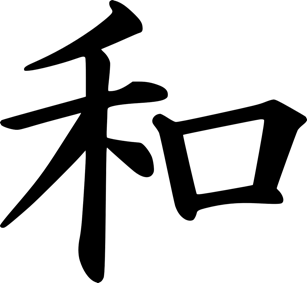
Many years ago, when I was still teaching Chinese in Tulsa, I mentioned to Cristy that half way through the year, some of my kids were still having problems with radicals. She then asked me, “What are you talking about?” (Cristy had studied Chinese with me at Fu Jen Catholic University in Taiwan). Said I, “You know, Chinese radicals.” To which Cristy responded, “I really don’t have any idea what you mean.” I then tried explaining by example. “You remember the ‘tree’ radical, the ‘word’ radical, the ‘hand’ radical and the ‘three drops of water’ radical.” Cristy really was clueless.
When I then showed her several characters that had the “water” radical, the “tree” radical, the “word” radical, and the “hand” radical, Cristy said, “I never learned about radicals. They would have really helped me remember characters.”
The Chinese word for “radical” is “部首 bùshǒu”. In traditional Chinese, there are 214 radicals. Radicals are components or parts of characters. Sometimes radicals ARE also “stand alone” characters, and the character form is often different from it’s radical form.
Here are some examples of Chinese pictographs (characters which were originally pictures of what they represent) which also function as radicals. All of these characters remain the same in both their simplified and traditional forms:
- The character for “female” is 女 nǚ. It is an ancient pictograph representing a woman kneeling.
- The character for “tree” or “wood” is 木 mù. One can easily see how this pictograph represents a tree.
- The character for “mouth” or “opening” is 口 kǒu. Again, an obvious picture.
A few Chinese pictographs changed the way they were written when Chinese characters were simplified in the mid-20thcentury. The traditional character for “horse” is 馬 mǎ. The simplified form is 马 mǎ. In traditional characters, 馬 mǎ retains its full form when it acts as a radical; in simplified characters, it also retains its simplified form as a radical. (e.g. mom = mā 媽, 妈)· The character for “gate or door” is 門 mén. The simplified form is 门 mén. In traditional characters, it retains its traditional form as a radical; in simplified characters, it also retains its simplified form as a radical. (e.g. to ask – wèn 問, 问) Many characters change their forms when they go from being a character to being a radical.
- The character for “hand” is 手 shǒu in both traditional and simplified forms. When hand is used as a radical, it looks like 扌in both traditional and simplified forms.
- The character for “person” is 人 rén. When “person” is used as a radical, it looks like 亻in both traditional and simplified forms.
- The character for the word, “word” in both simplified and traditional charactersis 言 yán. More often it is written like this 言. The radical form of the word, “word” in traditional form is exactly the same as the character. However in it’s simplified form, it looks like this 讠.
So, why should you be curious about radicals? The short answer is that knowing radicals makes learning to recognize, remember, and write Chinese characters easier. If, when you see the word for “trust” 信 xìn, you can see it as two radicals, instead of 9 strokes, it becomes easier to remember. It’s easier to decipher the word for “thank” 謝xiè if you recognize three radicals than it is to break it into 17 strokes. It’s a little like remembering a word in syllables instead of by its spelling. I’ll never forget Kurt Vonnegut’s wonderful made up word from “The Sirens of Titan”. When I tried to spell “Chrono-Synclastic Infundibulum”, I blew it. But since I could remember how to say the word, it was easy to Google and find the correct spelling. In Chinese, if you can remember the main radical, that can help you find the character. After you learn the proper stroke order for writing down radicals, it will make it easier for you to jot down characters that arouse your curiousity.
Here are 20 common radicals to look for where ever you see written Chinese.
- 刂= knife
- 氵= water
- 土= earth
- 子= son
- 宀= roof
- 心or 忄= heart
- 戈= spear
- 日= sun or day
- 月= moon or month
- 灬= fire
- 竹= bamboo
- 纟or 絲 = silk
- 艹= grass
- 衣= clothing
- 足= foot
- 辶= walk
- 雨= rain
- 饣or 飠= eat
- 鱼or 魚 = fish
- 龙or龍 = dragon
Chinese Odyssey 12
I discovered one symbol’s
not always a word,
that having no alphabet
wasn’t absurd.
Every stroke of the brush
was placed with precision.
Each line, dot, and hook
was there for a reason.
 The Panda in the Room PD