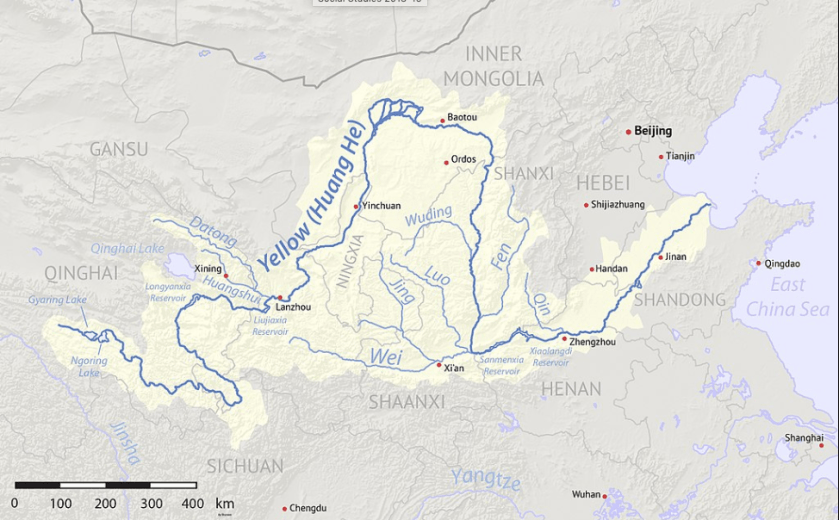
 Shannon1 [CC BY-SA 4.0 (https://creativecommons.org/licenses/by-sa/4.0)]
In the early 2000s there were three types of tickets foreigners could buy for trains. Soft sleeper was the premier class. There were 4 beds to a coach and once situated, you could shut the door and keep the smoke out of your room. This worked best, of course, if you were traveling in a group of 4. Otherwise, there was no way of knowing who you might end up next to. An added benefit to many foreigners was that the soft sleeper cars usually had access to a sit-down toilet. For those not accustomed to squat type toilets, train toilets could create additional challenges.
Hard sleepers were actually more fun. There were two sets of three-layered bunks in each open doored section. Although you often had to scrounge for a place to store your bags, once you finally settled into your bunk, the ride was every bit as comfortable as the soft sleeper. For kids, it was like a giant sleepover and was a highlight of many of their China trips.
Seats were fine for short rides of a few hours and I believe there were different categories of seats as well. Tickets would also be sold with no seat number and during holidays, people would sit anywhere they could park their bums. Including inside the toilet (or so I’m told.)
(note: Trains like the ones we rode back in the early 2000s still exist in China, but China also has high-speed and bullet trains and smoking on trains is no longer allowed. Not long ago, I boarded a high-speed train in Beijing at 10:00 a.m. By 8:00 p.m., I was enjoying a meal with my family back on Hong Kong Island.)
From Hohhot (呼和浩特 Hūhéhàotè) to Baotou (包头市 Bāotóu) is less than 100 miles, as the crow flies. We boarded the hard sleeper in Hohhot, following the northernmost plateau of Yellow River before it dipped down just north of the Ordos Desert (鄂爾多斯沙漠 È’ěrduōsī Shāmò in Inner Mongolia flowing towards Yinchuan (银川市Yín chuān shì) in the Ningxia Hui Autonomous Region (宁夏回族自治区 Níngxià Huízú Zìzhìqū) and ending in Lanzhou (兰州市Lánzhōu), Gansu 甘肃省 (Gānsù Shěng). For a little while starting in Yinchuan, we were close enough to the Great Wall to almost see it. Even if we didn’t see it, we knew it was there.
From Inner Mongolia down to Gansu, we saw monks in robes, Tibetan steles, and prayer flags, all indicators that Buddhism in this part of China was more similar to Tibetan Buddhism than the Buddhism we experienced in the southern and eastern parts of China. It was like traveling from America’s east coast megalopolis into the corn belt of the mid-west. The pace and the mannerisms seemed somehow different.
Chinese Odyssey 54
I was feeling complacent
on the train to Gansu,
reading Renmin Ribao,
eating Mapo Doufu.
Watched the Huang He meander
through loess plateau corn.
On a crumbling Great Wall,
heard a Tibetan horn.
 The Panda in the Room PD