Chinese Odyssey 70
In the old town of Lijiang,
the streets were confusing.
At night on Square Street
we found dancers amusing.
In the middle of town
ran a clear crystal stream
where paper boats carried
our hopes and our dreams.
The province of Yunnan has it all. Of the 55 recognized minorities in China, 25 of them can be found in Yunnan. The city of Jinghong in southeastern Yunnan makes you wonder if you may be in Burma. The capital, Kunming, located on the banks of Dianchi Lake (滇池 Diānchí) has a climate more like that of San Francisco. The further north one travels from Lijiang into the foothills of the Hengduan Mountains (横断山脉 Héngduàn Shānmài), the more it seems to morph into Tibet.
It was not long after a New York Times article, In China, Rock’s Kingdom by Bruce Chatwin, in 1986, that Lijiang became a ‘must visit’ place for backpackers with their sights on China. A slight segue off of the “Hippie Trail” that already had backpackers camping out in Yangshuo and Dalian, Lijiang had some even cooler draws. First off was the town itself . . . well the old town that is. The old part of Lijiang was a maze. Lanes and alleys broke out in funny angles. There was a crystal clear canal running through the middle of the town where people would float paper boats with wishes. The backpacker hotels were usually two story rustic wooden houses surrounded by small stores selling clothes, curios, tea, ice cream, and other necessities. In the middle of old town is Square Street where dancers, singers, and other performers entertained at night. But that was then, and now is now. Like so many “destination” spots, Lijiang is no longer ‘off the beaten path.’
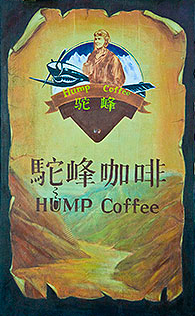
Forty kilometres due north of Lijiang is the 18,360’ high Jade Dragon Snow Mountain 玉龙雪山 Yùlóng Xuěshān. The Naxi people know it as Mt. Satseto and nearby lived the famed Austrian-American botanist Joseph Rock. I’m sure the area at the base of the mountain looks very different now than it did when Rock was there in the early to mid-20th century. At the foot of Mt. Satseto is a visitor center where stores sell containers of oxygen for the high elevation, and where I bought a fine cup of Hump coffee years ago. From the same building, one can board a cableway to a viewing platform nearly 15,000 feet in elevation.
It was back at the base of Jade Dragon Snow mountain that in 2006, film director Zhang Yimou first presented a spectacular outdoor extravaganza employing more than 500 Naxi, Bai, and Yi people called “Impression Lijiang.” The performance takes its audience along the ancient Tea Horse Road before introducing you to the lives and the cultures of the people who inhabit this amazing region. There are three shows a day (during peak season) packed with singing, dancing, drumming , and story telling all in beautiful local costumes with the majestic Jade Dragon Snow Mountain as the back drop. Perhaps best know for his ground breaking movies such as Red Sorghum (1987), Raise the Red Lantern (1991), and Hero (2002), “Impressions Lijiang” is one of seven live shows that Zhang Yimou has created scattered throughout China.
One shouldn’t leave Lijiang without learning something about the Nakhi or Naxi (纳西族 Nàxī zú) people and culture. Two foreigners who were fascinated with the Naxi and wrote prolifically about them were Joseph Rock and Peter Goullart. Between these two friends, they explored the Naxi language, lives, and beliefs of the Naxi people. The religion of the Naxi is called Dongba (东巴 dōngbā) and is related to the Tibetan Bon religion. The Dongba religion appreciates and celebrates man’s relationship with nature and the spiritual world. The Naxi people have their own music and their own distinct language and literature. Dongba is also the name of the pictographic script that the Naxi developed in the 7th century CE. Joseph Rock actually wrote the first Naxi-English Encyclopedic Dictionary, which is now preserved in Harvard University Library. In addition to his dictionary, Rock wrote 18 journals and books related to the Naxi culture.
Like so many indigenous cultures and languages, both the language and the religion of the Naxi people is fading. The Cultural Revolution from 1966-76 didn’t help things out. Very few young people after that period of time were really interested in preserving the Naxi culture. In 2004, only about 20 Dongba masters were still active and many of them were old. At that time, almost 80% of the people in the area around Lijiang were Naxi, but only about 30% of the school-aged children there spoke their native language and even fewer could read their hieroglyphs.
In 2017, D.J. Poupard from the University of Hong Kong wrote a postgraduate thesis entitled “Rescued into extinction?: the case of the Naxi texts in translation” Poupard asks the question, “Can translation go beyond the text and rescue a culture?” He suggests that “It may be the case that the uniquely semi-oral nature of the Naxi traditions needs to be re-evaluated and recreated in translation, for the Naxi ritual texts are at once written and oral; they can be read, but not in any fixed form.” But it was the question in the first part of his title is what I found most compelling. Can a language like that of the Naxi be, “Rescued into Extinction?” https://hub.hku.hk/handle/10722/241397
 The Panda in the Room PD