The Heavenly Horses of Chang’an

Chinese Odyssey 63

We opened a door

in the sky and stepped through.

Wulumuqi to Xi ‘An

on carpets, we flew.

In the History Museum

we wandered through time,

found ancient inventions

and poems without rhymes.
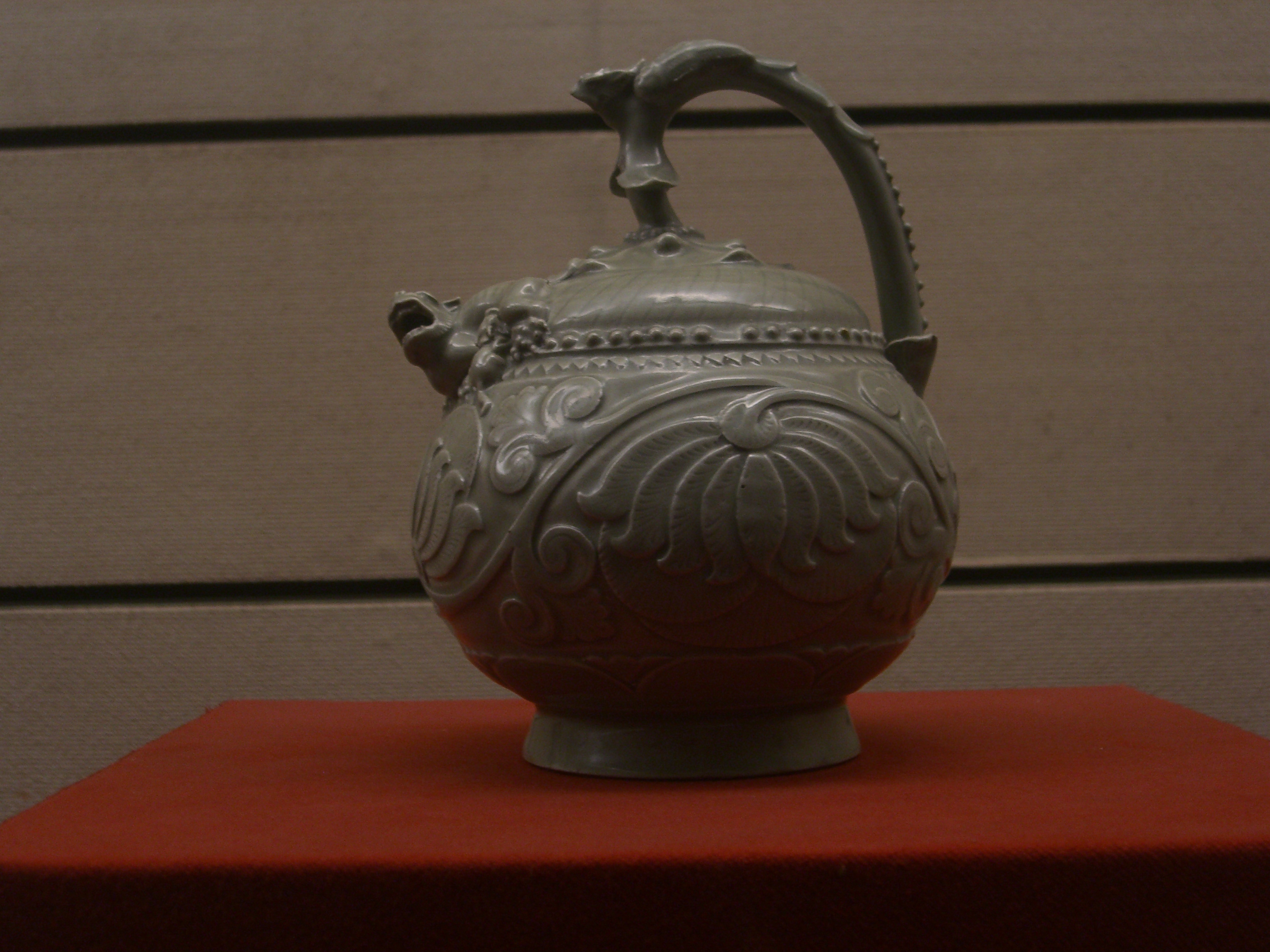
Teapot from the Shaanxi H. Museum

The Han Dynasty lasted more than 400 years – from 206 BCE to 220 CE. In many ways, it defined much of what China was to become. To this day, over 90% of the people in China consider themselves to be Hàn Rén 漢人 (lit. people of the Han) and the Chinese language in its totality is referred to as Hàn Yŭ 漢語 (the language of the Han).  A hǎohàn 好汉 in China is “a good guy.” The Han Dynasty produced some of the coolest inventions ever: Chinese paper was invented then, as was moveable type, instruments for measuring seismic activity, wheel barrows, suspension bridges and many other amazing innovations were said to have been invented during this longest of the Chinese dynasties.

One of the first exhibits to catch my eye at the Shaanxi History Museum was a tea pot with no lid. When the teapot was turned over there was a clay funnel built into the bottom of the teapot and scalding water would have been poured into the clay funnel. Turn the teapot right side up and the tea stayed in the pot. I’m still not sure how they put the tea leaves into the pot, though or how the inside of the pot was cleaned. Then there was the goose shaped smokeless bronze lamp. The smoke from the flame of the burning lamp went up through the long neck of the goose and back into the body of the lamp which contained water and there the smoke would die. One sided mirrors and coins with squares cut out of them. Water wells and grain grinders, axes and adzes, and even a Han loom that looked modern all were exhibited at the Shaanxi History Museum. From the Tang Dynasty there were wine pots made out of silver and drinking cups in the shape of horns mad out of agates. One of the most famous paintings there from the Tang Dynasty had five men mounted on horses playing polo English style.

The place we now call Xi’an had a different name up to the beginning of the Ming Dynasty (14th Century).  Chang’an was actually a few km northwest of the modern city of Xi’an. Chang’an loosely translates to Eternal Peace. It’s founders tried to insure that by positioning Chang’an near both the Huang He and the Wei rivers in an area surrounded on all sides by hills. Artifacts found near the site of Chang’an pre-date the Shang Dynasty and by the end of the Eastern Zhou Dynasty (771-256 BCE) Chang’an was China’s capital. At that time, Chang’an was one of the largest cities in the world having close to one million people. Chang’an was also China’s capital during the Han, the Sui (581-618 CE) and the Tang (618-907 CE) dynasties.

Chang’an was the eastern portal to the Silk Road. It was in 128 BCE during the Western Han Dynasty when Zhang Qian (張騫 Zhāng Qiān) , a young imperial officer, was sent by Emperor Han Wu Di (漢武帝 Hàn Wǔ dì) from Chang’an to explore the Western region to try to establish a military alliance with the Kingdom of Yuezhi in modern day Tajikistan. To do that, he needed to go through Inner Mongolia which was controlled by the Xiongnu (匈奴Xiōngnú).   Zhang Qian was captured by the Xiongnu in the Hexi Corridor and held captive for more than 10 years. While a prisoner Zhang Qian married a Xiongnu woman who bore him a son.  When the Xiongnu leader died, Zhang Qian and his good friend and guide, Ganfu (甘父 Gān fù) escaped with Zhang Qian’s wife and son, but instead of returning to Chang’an, they continued north to Khöshöö Tsaidam in modern day Mongolia and then followed the northern edge of the Tarim Basin , around the Kunlun mountains,  and even stopped at Kashgar. They then continued west to Ferghana (modern day eastern Uzbekistan, Tajikistan and Kyrgyzstan), and south to Bactria. While in Bactria (present day Afghanistan, Uzbekistan, and Tajikistan), Zhang Qian learned about Alexander the Great and this was the first recorded meeting between these great civilizations.  On their journey home,  Zhang Qian’s entourage traveled east below the Tarim Basin and crossed the Gobi Desert before eventually reaching Chang’an.

Zhang Qian was much more successful in his second journey to the west when he was accompanied by 300 men to present day Kazakhstan, Kyrgyzstan, Afghanistan, Pakistan, and Uzbekistan. Although Zhang was unable to visit India and the Macedonian and Parthian Empires, he did learn valuable information about those regions.  On his journey back, Zhang Qian was able to bring back alfalfa and grapes which grew easily in the western regions of China. He also brought back stories of horses from the Fergana valley (located between Kyrgystan and Tajikistan) which Han Wu Di renamed “Heavenly horses” (大宛馬 dàyuānmǎ aka 宛馬 yuānmǎ). Han Wu Di sent 20,000 infantry and 6,000 cavalry west to the Fergana valley to obtain these horses, but lost half of his soldiers along the way and they lost the first “War of the Heavenly Horses.” The Emperor was not happy so he sent another bigger force of 60,000 mostly prison recruits and 30,000 horses and they had no problem making there way to Dayuan (Fergana) and after a 40 day siege, the Han forces achieved victory. In the end, the Han General left Dayuan with 3,000 horses of which around 1,000 Heavenly Horses, the Lamborghinis and the Aston Martins of China 2000 years ago, finally arrived in Chang’An in 101 BCE.

“The Arrival of the Heavenly Mare”

天馬徠兮 從西極

經萬里兮 歸有徳

承靈威兮 降外國

渉流沙兮 四夷服

The heavenly horses have arrived

from the Western frontier

Having travelled 10,000 li,

they arrive with great virtue

With loyal spirit,

they defeat foreign nations

And crossing the deserts

all barbarians succumb in their wake!

–The Shiji, Chapter 24 (“The Treatise on Music”)  Shiji (史記) vol. 24, “Yueshu (楽書)” number 2.
 

Assalamu Alaikum

Chinese Odyssey 62

“Assalamu Alaikum”

heard more than “Ni hao”.

Was this really China?

If so, where was Mao?

A lake named for Heaven

felt just like my home.

Lake McDonald in Xinjiang

a picture, a poem.

Waterfall by Heavenly Lake

Oo-loo-moo-chee is more or less how this far western Chinese city is pronounced in Mandarin. Ürümqi is the name of the same city on a map. In Pinyin and in Chinese characters,  it looks like this – Wūlǔmùqí 乌鲁木齐. Located a little north and west of the center of the Xinjiang Uyghur Autonomous Region, some say that Wulumuqi “is not the end of the world – but you can see it from there.” That said, the estimated population of Urumqi today is 3.5 million, by far the largest city in far western China.

Although some say that Xinjiang has historical claims going back to the Han Dynasty where China called the area a “protectorate of western regions”, most understand China’s legal claim to Xinjiang to have occurred in the Qing Dynasty as a result of the Dungan Revolt in 1884. The name “Xinjiang” actually means “new border” and refers to any area previously claimed to be a conquered region of China and was lost and then regained.

Islam has played a major role in Xinjiang for a millennium. The majority of people living in Urumqi are Han Chinese, but close behind are the Hui and the Uyghurs who are Sunni Muslims. Walking through this colorful city, I received many more smiles when I greeted people with the traditional “Assalamu Alaikum” greeting than I did when I tried to open a conversation with “ni hao”. But Urumqi also felt Chinese. Ethnicities abound, all having occupied this city since its beginning. Most of the stores and goods look the same as those available all over western China. I thought Urumqi to be a really nice amalgamation of people unlike any other city in China I had ever visited.

A little over 100 km due east of Urumqi is a lake called Tian Chi (Heavenly Lake). Located in the Tianshan mountain range, it receives the same snow melt as do the karezes in Turfan. Surrounded by glacial peaks, it really did remind me of Glacier National Park in Montana. Heavenly Lake reminded me of a smaller version of Lake McDonald in Glacier. On a small tour boat I asked the tour operator where people swam. She was adamant that no one could swim in Heavenly Lake. It was much too cold. When I told her about swimming in Lake McDonald, she assured me that it could not have been the same. No one could survive swimming in Heavenly Lake. I beg to disagree.

Although Xiwangmu (西王母) predates Daoism, no one knows her origin story. Time is imperceptible to her, “a thousand years, like a cricket’s chirp.” First appearing in oracle bone inscriptions 1500 years before the birth of Christ, Xiwangmu was revered as the Western Mother. Some incarnations portray her has having the teeth of a tiger early in her life. She was said to have lived in a palatial paradise where gods and humans could come together. She was a Daoist master who enamored  King Mu at Turquoise Pond (thought to have been Heavenly Lake) in the Zhou Dynasty. She was said to have visited the Emperor Han Wu Di in a chariot made of purple clouds. But neither King Mu nor Emperor Han Wu Di was able to complete her teachings which would have allowed them to attain immortality. She is also mentioned in the Journey to the West where she had a peach tree garden which only blossomed every three thousand years. The monkey king was still out of control at this time, insisting that everyone refer to him as Qítiān Dàshèng (齊天大聖), or the “Great Sage Equal to Heaven”. For eating all of the immortality peaches in the Jade Emperor’s garden, Sun Wu Kong (the Monkey King) was imprisoned under a mountain for 500 years.

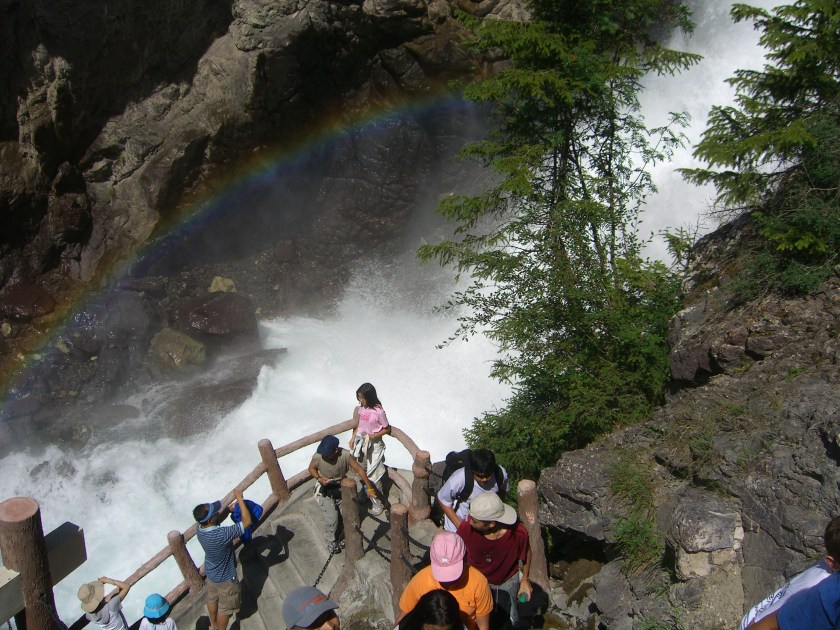
Walking down a manicured path beside Heavenly Lake we eventually began our descent down wooden steps alongside a beautiful stream which turned into an amazing rainbow shrouded waterfall. The splashing water and the crisp air breathed new life into all of us before boarding the bus back to a birthday banquet in Urumqi.

The Karezes of Turfan

Chinese Odyssey 61

From Gansu to Xinjiang,

we traveled by rail.

By bus on a highway

where wind mill farms wail.

Karezes of Turfan

flowed down from Tian Shan.

Flaming Mountains nearby

were too hot for man

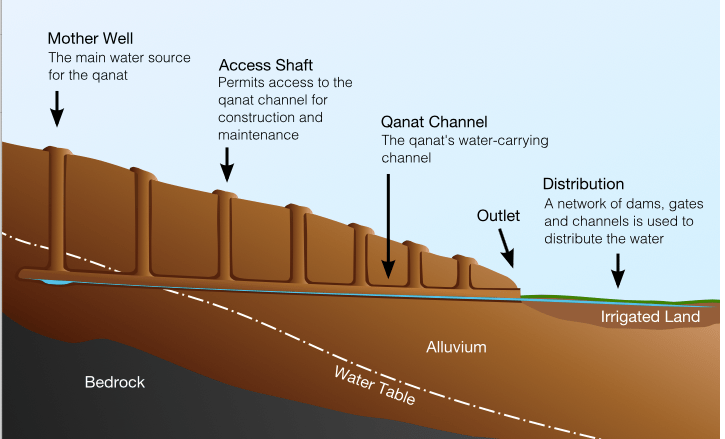
Screen Shot 2020-01-30 at 5.20.52 PM.pngSamuel Bailey (sam.bailus@gmail.com) [CC BY (https://creativecommons.org/licenses/by/3.0)%5D

Looking out the window of our air conditioned bus, the Flaming Mountains (火焰山 Huǒyànshān) aka Gaochang Mountains (高昌 Gāo Chāng) seem incredibly inhospitable. In summer the temperature of the Flaming Mountains frequently exceeds 50 °C (122 °F). Passing by in the early evening, the low hills seem to be on fire, henceforth their name. It was hard to believe that beneath these Flaming Mountains there were manmade tunnels built 2000 years ago carrying crystal clear water from the alluvial plain at the base of the Tianshan Mountains (天山) into the farmlands of Turfan nearly forty kilometres away.

Turfan aka Turpan (吐鲁番市 Tǔlǔfānshì) lies about 180 km southeast of Urumqi. The 1.27 cm of rainfall a year it receives could never support an agricultural community. Nearly two thousand years ago, farmers and engineers figured out an elaborate system which would transport the snowmelt from the base of the Tianshan Mountains underneath the Flaming Mountains and into Turfan. This underground system (called karez a.k.a. qanats) was comprised of wells of varying depths, some up to 100 feet deep.  Between the wells (from 20-70 meters apart) they dug tunnels large enough for a person to stand up and walk through. These connecting tunnels would eventually carry pure sweet water to the grape, pear, pomegranate, apricot, apple, peach, fig, and walnut growing farms of Turfan. Most of the water in Turfan begins with the snow melt at the foot of the Tianshan mountains. This city of 600,000 rests in the Turfan Depression, an area whose average elevation sits 154 m (505 ft) below sea level.

Today, there are only a couple of hundred working karezes in Turfan, down from over 1800 in the 1950’s. Located in a fault bounded trough, the 4,000 sq. kilometers of land situated below sea level called the Turfan Basin is shrinking because of oil-drilling, agricultural use, and glacier melting caused by global warming. To maintain the karezes, now, as in ancient times, once a week someone needs to be lowered down each well into the tunnels to clean out the silt and do whatever maintenance is necessary to keep the water flowing. Like the disappearing rice terraces north of Guilin in the Guanxi Zhuang Autonomous Region, young people who used to maintain these kinds of labor intensive agricultural jobs, no longer want to stay in rural China, but instead choose the more lucrative paths of factory work in mega-cities called Special Economic Zones like Shenzhen and Donguan in Guangdong province.

In the 1920’s when the French sisters and Cable, first arrived in this amazing oasis, they commented “. . . Turfan lies like a green island in a sandy wilderness, its shores lapped by grit and gravel instead of ocean waters, for the division between arid desert and fertile land is as definite as that between shore and ocean. Its fertility is amazing, and the effect on the traveller, when he steps from the sterility and desiccation into the luxuriance of Turfan is overwhelming.” The Gobi Desert by Mildred Cable w/ Francesca French, The Macmillan Company 1944.


The Flying Nymphs of Mogao

Chinese Odyssey 60

In the grottoes of Mogao

high up on the walls

were angels and fairies

who flew through the halls

The message apsara

had helped us to find

“perfection of wisdom,

brings peace to the mind.”

File-Apsara_playing_a_Chinese_flute_-_Yulin_Cave_15https://upload.wikimedia.org/wikipedia/commons/8/8f/File-Apsara_playing_a_Chinese_flute_-_Yulin_Cave_15.jpg

Sometimes alone, sometimes in pairs or groups, pale and dark, Chinese and foreign, mostly female. They danced, flew, played musical instruments, performed acrobatics with colorful ribbons, rode on horseback, and protected others.  Similar but somehow different images from Buddhist temples in Ankgor Wat and Hindu temples in India. They called them “apsara”, but at Mogao, the question emerged whether or not these were apsara at all. I had learned that apsara were “cloud and water” female spirits, nymphs or fairy like figures, whose major role appeared to be that of pleasing men.” What really got me thinking however was an article called “The Case for Feitian”. Feitian (飛天) is the Chinese name for the figures one finds decorating the walls of many of the caves of Mogao. Fei means “to fly” and “tian” means “sky” or “heaven.” The more I studied the 5,000 feitian from the 700 plus caves at Mogao, the more I began to see that these figures were unique. They were not all idealized figures of women. Some of these apsaras were male and some of the male and female figures were muscular and most were more modest than those on the walls of temples in India and Cambodia. Had the feitian been influenced by Buddhist or Hindu art? Without a doubt. Were there strong Chinese influences on these figures created over the course of nearly 1,000 years? Definitely.

The Oxford Dictionary defines apsara as “a celestial nymph, typically the wife of a heavenly musician.” Your Dictionary provided an even more interesting definition: “In Hindu and Buddhist tradition, one of a race of beautiful female supernatural beings that inhabit the sky, dance for the entertainment of other celestial beings, and often attempt to seduce mortal men practicing asceticism.” The same dictionary explores the origin of Apsara as “ āp, ap- water and saras as things that flow, lake -the Apsaras being depicted as delighting in water.” “Apsara.” Apsara Dictionary Definition | Apsara Defined, http://www.yourdictionary.com/apsara.

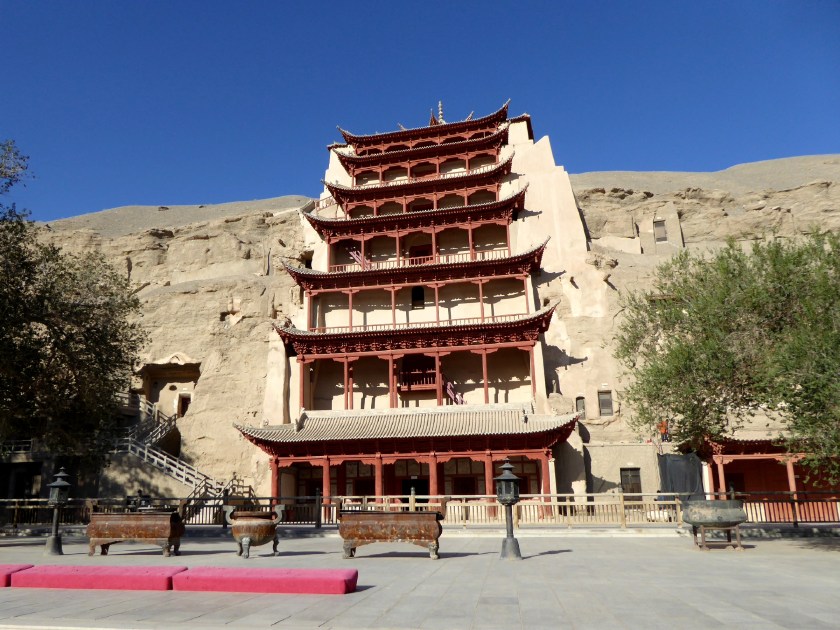
When Le Zun (Lè Zūn 樂尊) stepped into the Hexi Corridor (Héxī Zǒuláng 河西走廊 ) in the 4th century C.E. and discovered pure, sweet spring waters near the present city of Dunhuang, he decided that would be a nice place to rest after his arduous journey across the Gobi Desert. In the evening, watching the sun set, images arose out of those mountains. Among the figures he saw in the heavens were thousands of fairy like apparitions dancing and playing music. Le Zun knew he had stumbled onto a sacred spot. A few years later, he was joined by another monk by the name of Faliang (Fǎ Liáng 法良) who had a similar vision. The word spread among Buddhist pilgrims that this was a sacred spot .  During the next millennium, mostly during the Tang Dynasty, over 500 caves were carved into the sandstone and filled with an amazing collection of Buddhist art. According to Karin Dienst’s article “Bringing ancient Buddhism to light” published by Princeton University, there were “2,000 Buddhist sculptures, 45,000 square meters of murals and more than 60,000 texts.”

Like so many places in China, one needs to plan a trip to the Mogao caves. As more Chinese enter the middle class and have more expendable income, the first place many Chinese want to see is China. Whether its climbing up stairs to the Great Wall at Mutianyu, or following the trails and stairs cut into the rocks of Huangshan or exploring the Buddhist art on the caves of Mogao, there will be crowds of people – all pilgrims hoping to see the fairy like apparitions seen by Le Zun so many centuries ago.

Dunhuang – a Diamond in the Rust

Chinese Odyssey 59

We came to some walls

in the midst of the sand

doors lead into caves

remarkably grand

where they preserved

statues, sutras and art

the oldest, the Diamond

the deepest, the Heart

Mogao_Caves_Dunhuang_Gansu_China_敦煌_莫高窟_-_panoramio_(4)Hiroki Ogawa [CC BY (https://creativecommons.org/licenses/by/3.0)%5D

Located in western China, 200 plus miles west of Jiayuguan on the eastern edge of the Taklamakan Desert, Dunhuang was a nexus where merchants and traders from China and the west interacted with Buddhist pilgrims on the western edge of the Gobi desert. About 25 km southeast of Dunhuang lies an area known as the “Caves of a Thousand Buddhas” (千佛洞 Qiānfó Dòng). It is also called the “Mogao Grottos” (莫高窟Mògāo Kū). They are, in fact, a one mile stretch of nearly 500 caves which were burrowed into sandstone by 366 monks in the middle of nowhere about 1000 years ago.

In 1900, a Daoist monk by the name of Wang Yuan Lu (王圓籙Wáng Yuánlù),  discovered a hidden door in one of those caves (cave #17 aka the Library Cave) while doing some painting restoration work. Behind the mysterious door, Wang discovered nearly 50,000 ancient manuscripts, rare textiles, silk embroideries, and other artefacts dating back more than a millenium.

In 1907, Hungarian born British archaeologist Aurel Stein first arrived at the Mogao Grottos. A year later, Paul Pelliot, the French Sinologist and Orientalist followed. Between the two of them, they “purchased” thousands of manuscripts, paintings, embroideries, and other artefacts from Wang Yuan Lu which they sent back to museums in London and Paris. Russian and Japanese explorers and collectors followed close behind.

Stein and Pelliot were also followed by the likes of Langdon Warner of the Fogg Museum in Boston who (according to Dong Linfu) cut out pieces from twelve frescoes because he wanted to preserve Chinese culture and thought that the Chinese were “subhuman, uncivilized, and unable to appreciate their past culture.” Alan Priest followed Warner carving out fourteen pieces of a stone frieze and carrying away six heads of Buddhist statues bound for the Metropolitan Museum of Art. (from Dong, Linfu. Cross Culture and Faith: the Life and Work of James Mellon Menzies. University of Toronto Press, 2005.)

The Mogao caves were designated as a UNESCO World Heritage Site in 1987.

The Heart Sutra was one of the documents retrieved from the Mogao caves. It’s recent translation by Thich Nhat Hanh as “The Insight that Brings Us to the Other Shore” (2014) is licensed under a Creative Commons Attribution-Non Commercial 4.0 International License.

Avalokiteshvara, while practicing deeply with
the Insight that Brings Us to the Other Shore, suddenly discovered that
all of the five Skandhas are equally empty, and with this realisation
he overcame all Ill-being.

“Listen Sariputra, this Body itself is Emptiness
and Emptiness itself is this Body. This Body is not other than Emptiness and Emptiness is not other than this Body. The same is true of Feelings, Perceptions, Mental Formations, and Consciousness.

“Listen Sariputra, all phenomena bear the mark of Emptiness; their true nature is the nature of no Birth no Death, no Being no Non-being, no Defilement no Purity, no Increasing no Decreasing.

“That is why in Emptiness, Body, Feelings, Perceptions, Mental Formations and Consciousness are not separate self entities.

The Eighteen Realms of Phenomena which are the six Sense Organs, the six Sense Objects, and the six Consciousnesses are also not separate self entities.

The Twelve Links of Interdependent Arising and their Extinction are also not separate self entities.  Ill-being, the Causes of Ill-being, the End of Ill-being, the Path, insight and attainment, are also not separate self entities.

Whoever can see this no longer needs anything to attain.

Bodhisattvas who practice the Insight that Brings Us to the Other Shore see no more obstacles in their mind, and because there are no more obstacles in their mind, they can overcome all fear, destroy all wrong perceptions and realize Perfect Nirvana.

“All Buddhas in the past, present and future by practicing the Insight that Brings Us to the Other Shore are all capable of attaining Authentic and Perfect Enlightenment.

“Therefore Sariputra, it should be known that
the Insight that Brings Us to the Other Shore is a Great Mantra,
the most illuminating mantra, the highest mantra,
a mantra beyond compare, the True Wisdom that has the power
to put an end to all kinds of suffering. Therefore let us proclaim
a mantra to praise the Insight that Brings Us to the Other Shore:

Gate, Gate, Paragate, Parasamgate, Bodhi Svaha! Gate, Gate, Paragate, Parasamgate, Bodhi Svaha! Gate, Gate, Paragate, Parasamgate, Bodhi Svaha!” (completely gone to the further shore)


God in the Gobi

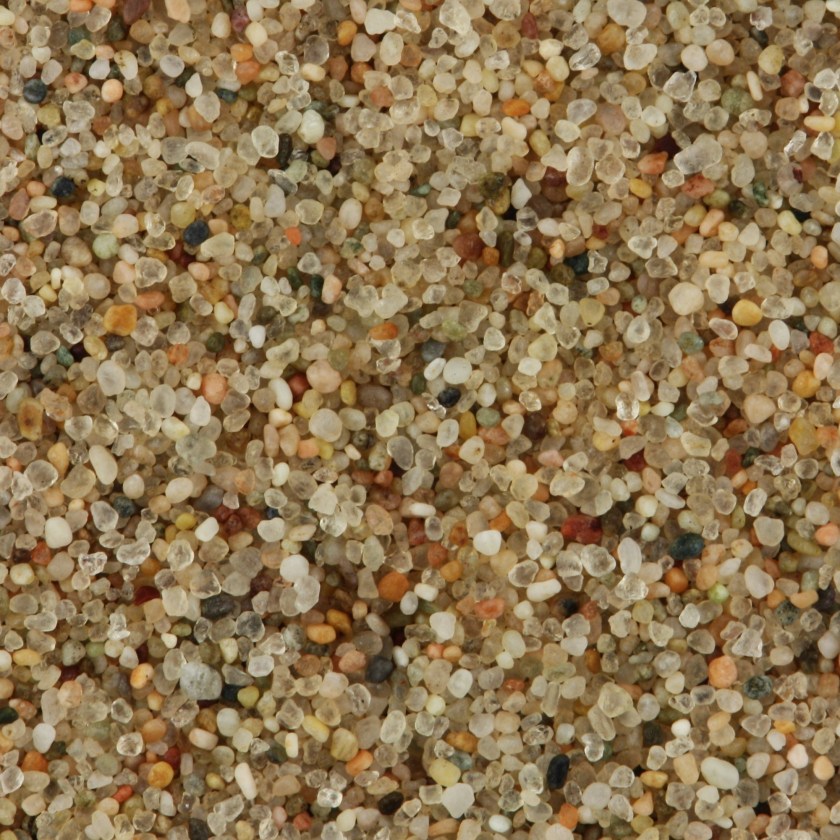
Sand_from_Gobi_DesertSiim Sepp [CC BY-SA 3.0 (https://creativecommons.org/licenses/by-sa/3.0)%5D

“’A place of desolation.’” murmured one of my companions.

I was fully aware of the acute terror with which the Chinese regard the Gobi regions, and I was determined to get a better understanding of the outlook from these men who lived on the very edge of the desert yet always turned away from it with a shudder and hurried toward the noisy clatter of the drill-ground and the barrack-room.

‘It is desolate,’ I said, ‘but in the silence and solitude God is still there.’”

So begins a travelogue unlike any I have heretofore encountered. The story of three women who, not once, but five times, traveled the entire length of the Gobi. For nearly 30 years, at the turn of the 20th century, “the trio”, sisters Eva and Francesca French, and Mildred Cable, were a part of the China Inland Mission, a Christian mission unaffiliated with any particular church or denomination which actively recruited both laypeople and single women into its service. Eva (Evangeline) French was a passionate woman whose upbringing in France and Switzerland in no way presaged who she was to become. Before converting to Christianity, Eva had described herself as “ “the fervid Nihilist, the incipient Communist, the embryonic Bolshevist.”

But when she finally did find her calling and faith, she embraced it fervently and signed on for a mission in China.  Eva was the first of “the trio” to arrive in China in 1893.  These were tumultuous times in the ‘middle kingdom’. The Empress Dowager Ci Xi was captain of a sinking marble boat that was the Qing Dynasty and Eva found herself in the middle of the Boxer Rebellion, not a healthy place for a foreign missionary in 1900. Reports came to Eva’s family that she had been killed by the Boxers and her mother fell into a depression she was never able to fully recover from, even after they discovered that the report of Eva’s death was erroneous. In 1908, Francesca joined her sister in China. At around the same time, Mildred Cable, an English woman who had grown up in a very strict religious family where she was constantly threatened by tales of God’s punishment to sinners, also answered “the call” she had felt as a young woman. Mildred Cable had planned to make that call with her fiancé, but he abandoned his plans to become a missionary and begged Mildred to stay. The decision to forsake marriage and to follow God into Boxer China, was never in doubt. Although she momentarily pined the loss of her love, serving others and spreading the gospel ultimately won out. The first person she met upon her arrival in China was Eva French.

When I stumbled into this amazing book, The Gobi Desert, I was immediately taken by the detailed descriptions of both the environment and the connections these women had been able to establish with the people they encountered. Unlike most missionaries, the French sisters and Cable adapted quite quickly to whatever environment they found themselves in. They learned to speak multiple Chinese dialects and lived their lives appreciating the same diet, wearing the same kinds of clothes, and living in the same kinds of homes as did the people they were serving. The more I read, the more I realized that they were not merely assuming these lifestyles out of duty, all three women seemed able to find satisfaction, joy, and beauty in their new surroundings and found value in and respect for both the people and the environments they encountered.

They were also dedicated to improving the lot of women in China. Not only did they want to train girls and women to carry on their missionary and evangelical work in China, they also wanted to introduce “Christian values” to illiterate Chinese peasant women by teaching young women science, the classics, literature, as well as addressing more difficult subjects such as foot-binding and infanticide. For more on this, read Jo Woolf’s article entitled “Mildred Cable, Eva and Francesca French” at  https://rsgsexplorers.com/2017/05/14/mildred-cable-eva-and-francesca-french/

What continued to both haunt me and draw me into this book were the descriptions of minutiae – those elements that surround us but most of us are blind to. Instead of describing the sand of the Gobi as hills or dunes, or even grains, their sand was more like that of William Blake’s Auguries of Innocence (“To see the World in a grain of sand, . . .”)

“Their flooring mainly consists of a wide expanse of sand or stone-littered plains, but a wealth of detailed variety hides itself under a superficial guise of monotony, and to the close observer each day’s march has a definite stamp of individuality.  By reason of their vivid and varied colorings, these stones are one of Gobi’s features of beauty, and sometimes the narrow, faint path passes through a litter of small multi-colored pebbles, which are rose-pink, pistachio-green, tender peach, lilac, white, sealing-wax-red and black burnished by sand, sun, and wind as though black-leaded, the whole, mixed with a quantity of orange-tinted cornelian, forming a matchless mosaic.” (from Cable, Mildred, and Francesca French. The Gobi Desert. Hodder and Stoughton, 1942.)

Chinese Odyssey 58

On bus, train, and foot,

traveling as we were able,

we followed God’s trio,

French sisters and Cable.

In the ’20s they lived

with peasants of Gobi,

saw God in sand grains,

mud homes like adobe.


The Original “Rubber” Rafts

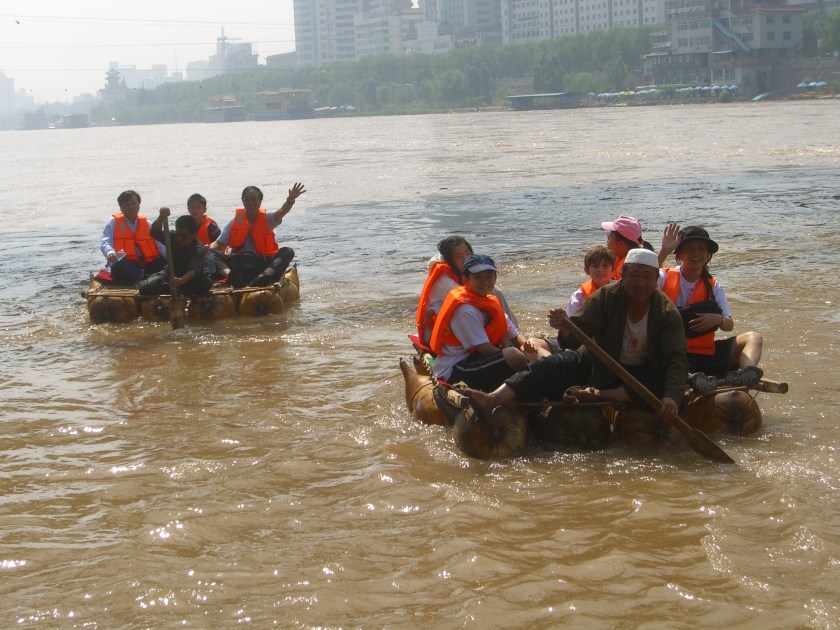
Original Rubber Rafts

When I saw these boats on the Yellow River outside of Lanzhou for the first time, I was mesmerized.

100 years ago. 1000 years ago. Kids the age of our kids would have ridden on the same boats across the same river at the same place.  Were these the first inflatable boats?

The wool must have first been shorn and put away to be made into thread, to be woven into cloth. Then meticulously, the head would have been severed and the flesh, the sinew, the bones, and internal organs would have been removed from that single orifice. Back in the day, there were no raft specialists living on the Yellow River. It would have been the boatmen, the raftsmen, who first painstakingly removed the precious internal organs, the lungs, the heart, the stomach, and the intestines, before taking out the meat and bones. Were there scraping and cutting tools specially designed for removing organs, bones, and meat? Sheep carcasses didn’t need to be discarded.  Through a process of trial and error, these craftsmen learned how to dry and scrape and tie and sew the carcasses so that no air was able to get out. The one hole for air was ingeniously cut into one of the hoofs and the owners, after blowing the sheep full with air, would simply fold the trotter in half and tie a few loops of sinew around the hoof.

I imagined ancestors of today’s rafters seeing the floating carcass of a bloated sheep on the river . . .

Big Joe (周大哥) and his two younger brothers, Erdi and Sandi, trudged along a high bank of the Huang He as it meandered across the southern part of the province we call Gansu. They had gone to their normal swimming hole, but found men building a giant water wheel where they used to play. Up ahead was an area  Erdi and Sandi had told him looked like a great new place to swim and bathe at the end of a hot day in the fields. As they eased themselves into the water, in the distance Erdi spotted a couple of black dots far up the river and warned his two siblings. Probably some kind of dead animals. His mother had told him when he was young that he should never touch these animals because it might make him sick. Still, the closer they got, the more he was drawn. His parents had always told him not to let anything go to waste and floating past him were two sheep carcasses which would eventually rot and sink into the river.  The Huang He was a massive river and Big Joe and his brothers knew they could never afford to own one of the cool wooden barges carrying merchants and soldiers from the northeast. As the dead sheep got closer, Sandi shouted, “Look, Erdi, there are kittens on top of that dead sheep.”  Sure enough, two forlorn-looking calico kittens were trapped on the carcass of one of the sheep.

“I’ll get ‘em.” Shouted Sandi as he waded into a shallow trough of the Huang He. Too late. Big Joe could only watch as his brother plunged slow motion into a deep hole and was caught in a strong current. Sandi was a pretty good swimmer, but he was no match for the Huang He.

“Grab the sheep!” yelled Big Joe “and hang on.”

Without thinking, Sandi reached out and grabbed a hunk of wool dragging in the water. As he pulled himself closer, he found that the sheep was buoyant enough for him to climb on top. The poor cats didn’t know what to do. “It’s OK,” said Sandi with a smile. “I’ve come to rescue you.”

At the same time, he thought, “Who’s going to rescue me?”

Big Joe and Erdi ran along the bank shouting, “Paddle in, San Di. Use your hands.”

But Sandi had a better idea. Now that he knew the sheep was strong enough to hold him, he lowered himself back into the water and began to kick. In no time, he found himself getting closer and closer to the river bank. Just before dark, his feet felt the bottom and he was able to walk onto the shore with his calico kittens. He also pulled the stinky sheep on shore.

Big Joe and Erdi ran down to the riverbank and they all hugged. Erdi had some little fish that he gave to the kittens so they were happy, too.

Sandi just sat with a big grin on his face. “You know those dream boats we always wanted, but never could afford?” Sandi asked his brothers. Pinching his nose with one hand, with the other he pointed his finger at the dead sheep and said, “Meet the future.”

The rafts we rode on were made of 12 sheep, and saplings, tied together with sinew and twine. Probably not much different from those made 1000 years ago. Riding on the Huang He on those rafts was a magical trip on a way-back machine.

Chinese Odyssey 56

Then we climbed on the first

“rubber raft” made from sheep.

As we crossed the Huang He,

some of us fell asleep.

Around Gansu and Qinghai,

Tibetans abounded.

In a town called Xia He,

we all stood confounded

On the train to Gansu

Yellow River Hohhot to GansuShannon1 [CC BY-SA 4.0 (https://creativecommons.org/licenses/by-sa/4.0)]

In the early 2000s there were three types of tickets foreigners could buy for trains. Soft sleeper was the premier class. There were 4 beds to a coach and once situated, you could shut the door and keep the smoke out of your room. This worked best, of course, if you were traveling in a group of 4. Otherwise, there was no way of knowing who you might end up next to. An added benefit to many foreigners was that the soft sleeper cars usually had access to a sit-down toilet. For those not accustomed to squat type toilets, train toilets could create additional challenges.

Hard sleepers were actually more fun. There were two sets of three-layered bunks in each open doored section. Although you often had to scrounge for a place to store your bags, once you finally settled into your bunk, the ride was every bit as comfortable as the soft sleeper. For kids, it was like a giant sleepover and was a highlight of many of their China trips.

Seats were fine for short rides of a few hours and I believe there were different categories of seats as well. Tickets would also be sold with no seat number and during holidays, people would sit anywhere they could park their bums. Including inside the toilet (or so I’m told.)

(note: Trains like the ones we rode back in the early 2000s still exist in China, but China also has high-speed and bullet trains and smoking on trains is no longer allowed. Not long ago, I boarded a high-speed train in Beijing at 10:00 a.m. By 8:00 p.m., I was enjoying a meal with my family back on Hong Kong Island.)

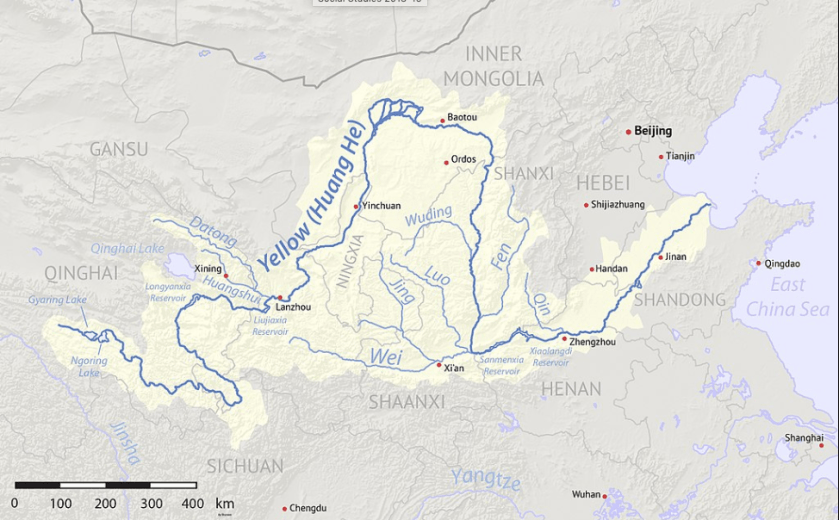
From Hohhot (呼和浩特 Hūhéhàotè) to Baotou (包头市 Bāotóu) is less than 100 miles, as the crow flies. We boarded the hard sleeper in Hohhot, following the northernmost plateau of Yellow River before it dipped down just north of the Ordos Desert (鄂爾多斯沙漠 È’ěrduōsī Shāmò in Inner Mongolia flowing towards Yinchuan (银川市Yín chuān shì) in the Ningxia Hui Autonomous Region (宁夏回族自治区 Níngxià Huízú Zìzhìqū) and ending in Lanzhou (兰州市Lánzhōu), Gansu 甘肃省 (Gānsù Shěng). For a little while starting in Yinchuan, we were close enough to the Great Wall to almost see it. Even if we didn’t see it, we knew it was there.

From Inner Mongolia down to Gansu, we saw monks in robes, Tibetan steles, and prayer flags, all indicators that Buddhism in this part of China was more similar to Tibetan Buddhism than the Buddhism we experienced in the southern and eastern parts of China. It was like traveling from America’s east coast megalopolis into the corn belt of the mid-west. The pace and the mannerisms seemed somehow different.

Chinese Odyssey 54

I was feeling complacent

on the train to Gansu,

reading Renmin Ribao,

eating Mapo Doufu.

Watched the Huang He meander

through loess plateau corn.

On a crumbling Great Wall,

heard a Tibetan horn.


The 3 “manly skills” of Inner Mongolia

Ana and the Inner Mongolian Saddle

China was only “conquered” twice. First, by Mongolians during the Yuan Dynasty (1271-1368 A.D.) and then by Manchus in the Qing Dynasty (1644-1912 A.D.) Most of what we know today as Inner Mongolia was a part of Mongolia which defeated the Chinese during the Yuan Dynasty. At the fall of the Mongolians to the Ming armies, there were already divisions among the various tribes. At the end of the Qing Dynasty, the new Republic of China incorporated both Manchuria and a large segment of Mongolia into its new Republic. And it wasn’t until 1945 that most of the rest of the world recognized what we now know as Mongolia as an independent country. Inner Mongolia is an autonomous region of China. Mongolia remains an independent country.

Inner Mongolia reminds me of parts of Montana. It’s the 3rd largest political region of China and is a bit off the normal tourist track. Horseback riding and livestock are abundant on the lush grasslands. There are no really big cities. It also has the longest northern border in China, bordering both Mongolia and Russia. In Inner Mongolia, horse riding, archery, and wrestling used to be known as the “three manly skills.”  Rodeo is still big in Montana, but few Montanans wrestle, and guns trumped bows and arrows shortly after Crazy Horse and Sitting Bull defeated Custer at the Little Big Hole in 1876.

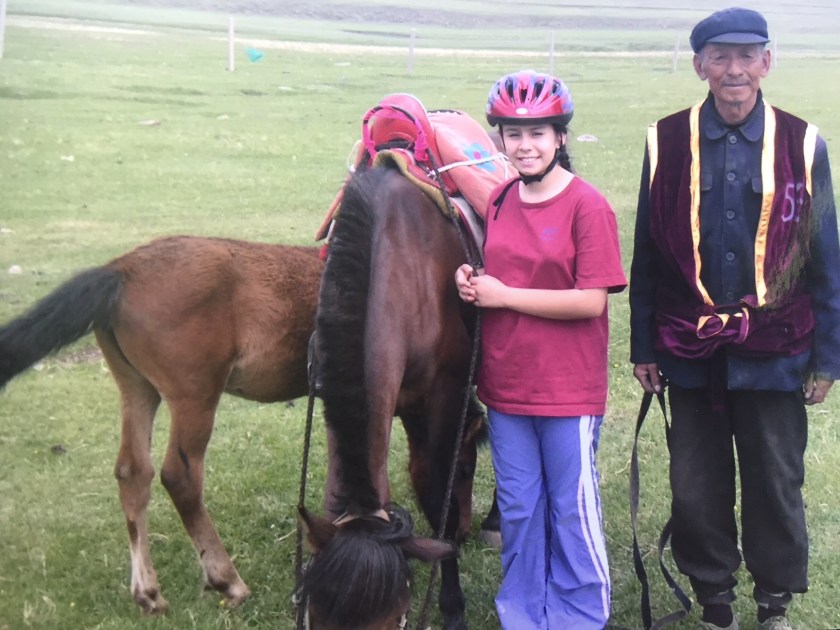
We rode horses on rolling grasslands a few hours from Hohhot. Colorful prayer flags like those in Tibet flew from mounds of stones topped with willow branches (敖包 áobāo) and a local family invited us into their house to have tea and sweet cheese. We spoke Putonghua with kids and asked what they would most like and they said “better schools” and asked us if we could stay and teach. After spending time in the schools and hills, it was time to trot back to our cement yurts complete with bathrooms, western sit-down toilets, air conditioners, and hot showers.

The salty butter tea we drank in the yurts we visited was probably made from cow’s milk and not yak. The “cheese” was sweet and chewy and more like candy than the cheese we were used to.

Inner Mongolia’s traditional musical claim to fame is throat singing – Khoomei (songs of eternity), as it is called in Mongolian, starts with a single pitch. As that pitch is being produced, a second, and sometimes a third pitch comes from the same throat and one is able to hear two and sometimes three sounds simultaneously. This happens by the singer tightening or loosening his throat and manipulating his tongue to produce multiple sounds at the same time.

I first heard Mongolian throat singers in Hong Kong in the 1990s and marveled how one person could produce several sounds simultaneously. Traditionally a male art, females are now becoming quite adept at the technique. Khoomei was once practiced only on the pastoral highlands of Mongolia, but has found its way into many parts of Inner Mongolia. “Khoomei” means “song of eternity” and dates back more than 1000 years. In Inner Mongolia, where the Heilongjiang (Amur River in Russia) forms the border between Russia and China, Mongolian hunters began settling in as nomadic farmers and it is in this environment Khoomei is said to have begun. If you’re curious to hear Khoomei, try listening to a youTube entitled “Huun-Huur-Tu – Live” at

https://www.youtube.com/watch?v=i0djHJBAP3U&feature=youtu.be&t=9m41s  In 1929, Arthur Miles tried his luck at Tuvan overtone singing in his rendition of “Lonely Cowboy” Parts 1 & 2 (Dallas, Texas, 1929) hillbilly https://www.youtube.com/watch?v=DpAFZnMyC7o

Chinese Odyssey 53

Our journey continued,

we too headed west

to the grasslands near Hohhot

Mongolian steppes.

Shared yak butter tea

with a family of peasants.

At night we retired

to our yurts, warm and pleasant.

The Road to Somewhere

Imprimir                            https://all-free-download.com/free-vector/download/china-political-map-vector_587825.html

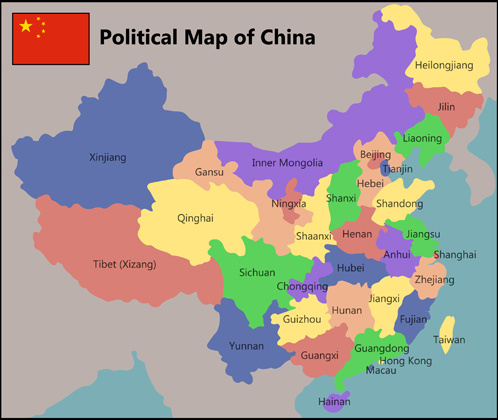
Look closely at the map. I started in Taiwan, then to Hong Kong. From Hong Kong almost due north to Beijing, mostly along the coast. I had skirted the eastern edge of China. Like visiting the east coast of America from Florida to Massachusetts and thinking I’d seen the USA.  The Gobi Desert, the Himalayas, Guilin, the Silk Road, the Terra Cotta Warriors. What else was I missing?

Politically, China has 23 provinces (省shěng) – if you count Taiwan as a province (which both China and Taiwan do.) Provinces are like states in the USA. In addition, China has 5 autonomous regions (自治区 zìzhìqū) which are similar to provinces, but each houses a major ethnic minority group which makes up much of its population. Autonomous Regions are supposed to have more freedom to make decisions;  4 municipalities (直辖市 zhíxiáshì) which are huge cities which have the same rights as provinces; and 2 Special Administrative Regions (特别行政区 Tèbié Xíngzhèngqū). The two SAR’s are Hong Kong and Macau. Both Hong Kong and Macau have “high degrees of autonomy” and enjoy the constitutional principle of “one country, two systems”. SAR’s are parts of China, but they get to have their own governments and can make their own laws for 50 years.

From where we left off after leaving the Great Wall, Inner Mongolia lay to my immediate north. From 1271 to 1368 AD, Kublai Khan (忽必烈 汗Hū bì liè hàn), grandson of Genghis Khan (成吉思汗 Chéng jí sī hàn) officially established the Yuan Dynasty (  Yuán Cháo) where he claimed all of China to be ruled by Mongolia.

The far western part of China is made up of only two regions: the Tibet (Xizang) Autonomous Region (西藏自治区 Xīzàng Zìzhìqū), and the Xinjiang Uyghur Autonomous Region (新疆维吾尔自治区 (Xīnjiāng Wéiwú’ěr Zìzhìqū).

Until recently, most people in the west had never heard of Xinjiang,  and Tibet was associated with esoteric Buddhism, Shang-ri-la, yak butter tea, the Dalai Lama, and to some, the Tibetan independence movement.

Tibet has an interesting history. Often referred to as the “rooftop of the world”, the average elevation of Tibet is 4,500 meters (nearly 15,000 feet). It was in 1271 AD, that China first claimed a portion of Tibet as its own during the Yuan Dynasty when Kublai Khan reigned. This claim of Chinese suzerainty over Tibet continued through the Ming and well into the Qing Dynasty. In 1912, the Republic of China stipulated Tibet as one of its 22 provinces, but in 1913, Tibet declared its independence from China. In 1951, however, China re-asserted its suzerainty over when the People’s Republic of China and Tibet signed a 17 point agreement officially reaffirming that Tibet was a part of China.

Tibet is the most sparsely populated region of China averaging about 2 people per square kilometre. In The Times of India on April 6, 2017, the Dalai Lama clearly stated “We are not seeking independence. We want China to give us meaningful autonomy. We want to remain with the People’s Republic of China.” He went on to say. “Tibet is materialistically backward, but spiritually advanced. We want to develop materialistically by remaining with China and it should also feel the same way for mutual benefit.”

About the same size as Iran, Xinjiang can be separated into two distinct regions by the Tianshan Mountains. To the north of the Tianshan Mountains, the people are composed of a variety of minorities including Kazakhs, Mongols, and Russians, and the predominant religion is Buddhism. South of the Tianshan Mountains in the Tarim Basin, live about 8 million Turkish speaking Uyghur people who practice Islam. The modern Uyghurs who look more Turkish than Han Chinese, descend from the Turkic Uyghurs. Occupying a huge portion of the Tarim basin is the  Taklamakan Desert (塔克拉玛干沙漠 Tǎkèlāmǎgān Shāmò). This massive desert has an area about the same size as Germany.

The Chinese first claimed a portion of Xinjiang nearly 2000 years ago during the Han Dynasty. The nomadic people from the far north-western part of Xinjiang supplied Chinese courts with their richest jade as early back as the Shang Dynasty. In the 1990s there were clashes between the 40% Han Chinese and the 47% Uyghurs and in 2009, a series of demonstrations led to 200 people losing their lives and nearly 2000 people suffering injuries in Urumqi. In March 2017, China established new “Regulations on De-extremification” and began arresting Uyghurs and sending them to “re-education camps.” It is estimated that at the time of this writing there are well over 1,000,000 Uyghurs being held against their will in an attempt to educate them on the pitfalls of extremist views on religion.

Chinese Odyssey 51

So we looked at a map

and saw she was right.

We’d just scratched the surface

on our line of sight.

We had to continue

this road to somewhere

so we took a step forward

and said a short prayer.