The Heavenly Horses of Chang’an

Chinese Odyssey 63

We opened a door

in the sky and stepped through.

Wulumuqi to Xi ‘An

on carpets, we flew.

In the History Museum

we wandered through time,

found ancient inventions

and poems without rhymes.
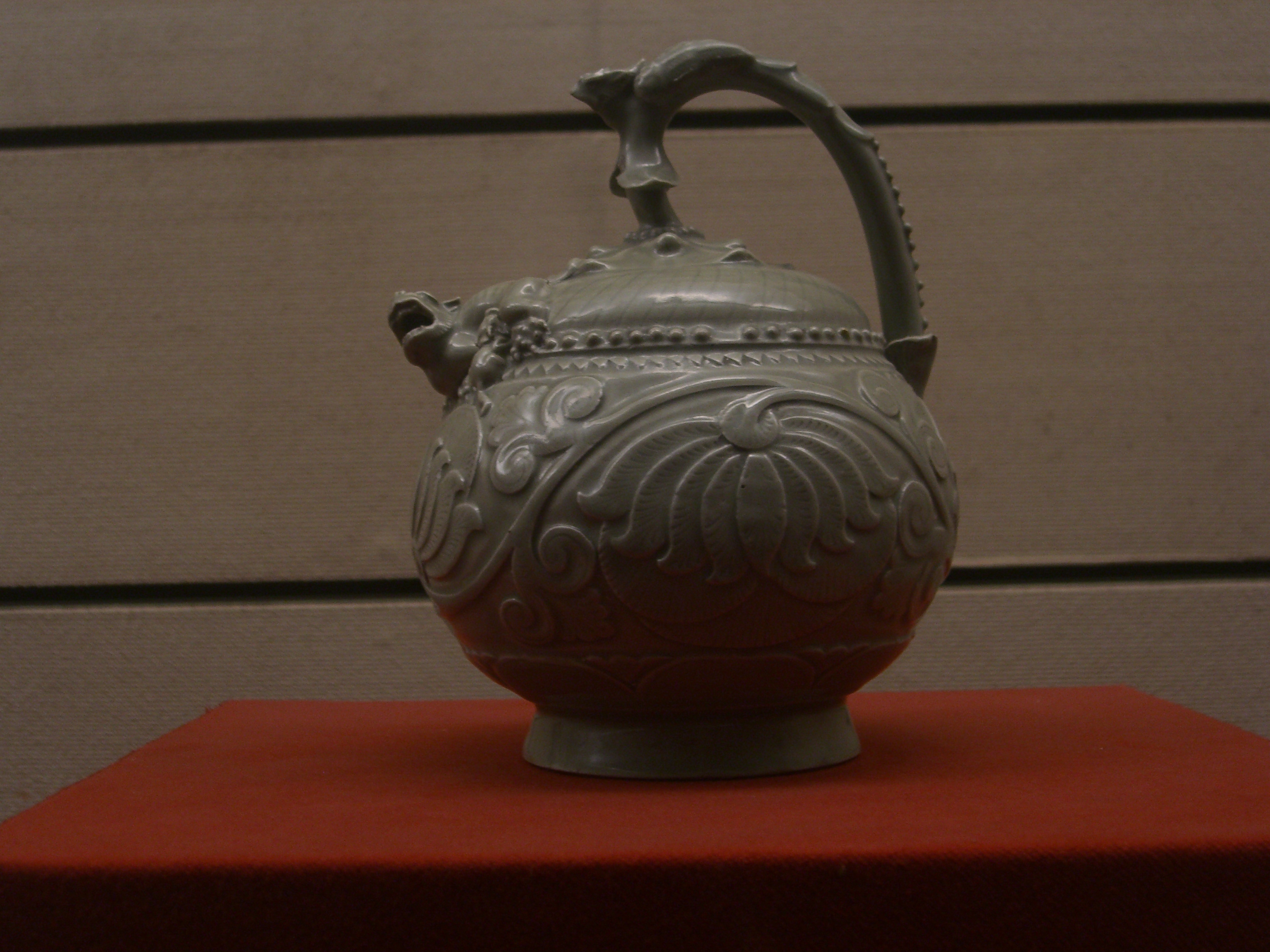
Teapot from the Shaanxi H. Museum

The Han Dynasty lasted more than 400 years – from 206 BCE to 220 CE. In many ways, it defined much of what China was to become. To this day, over 90% of the people in China consider themselves to be Hàn Rén 漢人 (lit. people of the Han) and the Chinese language in its totality is referred to as Hàn Yŭ 漢語 (the language of the Han).  A hǎohàn 好汉 in China is “a good guy.” The Han Dynasty produced some of the coolest inventions ever: Chinese paper was invented then, as was moveable type, instruments for measuring seismic activity, wheel barrows, suspension bridges and many other amazing innovations were said to have been invented during this longest of the Chinese dynasties.

One of the first exhibits to catch my eye at the Shaanxi History Museum was a tea pot with no lid. When the teapot was turned over there was a clay funnel built into the bottom of the teapot and scalding water would have been poured into the clay funnel. Turn the teapot right side up and the tea stayed in the pot. I’m still not sure how they put the tea leaves into the pot, though or how the inside of the pot was cleaned. Then there was the goose shaped smokeless bronze lamp. The smoke from the flame of the burning lamp went up through the long neck of the goose and back into the body of the lamp which contained water and there the smoke would die. One sided mirrors and coins with squares cut out of them. Water wells and grain grinders, axes and adzes, and even a Han loom that looked modern all were exhibited at the Shaanxi History Museum. From the Tang Dynasty there were wine pots made out of silver and drinking cups in the shape of horns mad out of agates. One of the most famous paintings there from the Tang Dynasty had five men mounted on horses playing polo English style.

The place we now call Xi’an had a different name up to the beginning of the Ming Dynasty (14th Century).  Chang’an was actually a few km northwest of the modern city of Xi’an. Chang’an loosely translates to Eternal Peace. It’s founders tried to insure that by positioning Chang’an near both the Huang He and the Wei rivers in an area surrounded on all sides by hills. Artifacts found near the site of Chang’an pre-date the Shang Dynasty and by the end of the Eastern Zhou Dynasty (771-256 BCE) Chang’an was China’s capital. At that time, Chang’an was one of the largest cities in the world having close to one million people. Chang’an was also China’s capital during the Han, the Sui (581-618 CE) and the Tang (618-907 CE) dynasties.

Chang’an was the eastern portal to the Silk Road. It was in 128 BCE during the Western Han Dynasty when Zhang Qian (張騫 Zhāng Qiān) , a young imperial officer, was sent by Emperor Han Wu Di (漢武帝 Hàn Wǔ dì) from Chang’an to explore the Western region to try to establish a military alliance with the Kingdom of Yuezhi in modern day Tajikistan. To do that, he needed to go through Inner Mongolia which was controlled by the Xiongnu (匈奴Xiōngnú).   Zhang Qian was captured by the Xiongnu in the Hexi Corridor and held captive for more than 10 years. While a prisoner Zhang Qian married a Xiongnu woman who bore him a son.  When the Xiongnu leader died, Zhang Qian and his good friend and guide, Ganfu (甘父 Gān fù) escaped with Zhang Qian’s wife and son, but instead of returning to Chang’an, they continued north to Khöshöö Tsaidam in modern day Mongolia and then followed the northern edge of the Tarim Basin , around the Kunlun mountains,  and even stopped at Kashgar. They then continued west to Ferghana (modern day eastern Uzbekistan, Tajikistan and Kyrgyzstan), and south to Bactria. While in Bactria (present day Afghanistan, Uzbekistan, and Tajikistan), Zhang Qian learned about Alexander the Great and this was the first recorded meeting between these great civilizations.  On their journey home,  Zhang Qian’s entourage traveled east below the Tarim Basin and crossed the Gobi Desert before eventually reaching Chang’an.

Zhang Qian was much more successful in his second journey to the west when he was accompanied by 300 men to present day Kazakhstan, Kyrgyzstan, Afghanistan, Pakistan, and Uzbekistan. Although Zhang was unable to visit India and the Macedonian and Parthian Empires, he did learn valuable information about those regions.  On his journey back, Zhang Qian was able to bring back alfalfa and grapes which grew easily in the western regions of China. He also brought back stories of horses from the Fergana valley (located between Kyrgystan and Tajikistan) which Han Wu Di renamed “Heavenly horses” (大宛馬 dàyuānmǎ aka 宛馬 yuānmǎ). Han Wu Di sent 20,000 infantry and 6,000 cavalry west to the Fergana valley to obtain these horses, but lost half of his soldiers along the way and they lost the first “War of the Heavenly Horses.” The Emperor was not happy so he sent another bigger force of 60,000 mostly prison recruits and 30,000 horses and they had no problem making there way to Dayuan (Fergana) and after a 40 day siege, the Han forces achieved victory. In the end, the Han General left Dayuan with 3,000 horses of which around 1,000 Heavenly Horses, the Lamborghinis and the Aston Martins of China 2000 years ago, finally arrived in Chang’An in 101 BCE.

“The Arrival of the Heavenly Mare”

天馬徠兮 從西極

經萬里兮 歸有徳

承靈威兮 降外國

渉流沙兮 四夷服

The heavenly horses have arrived

from the Western frontier

Having travelled 10,000 li,

they arrive with great virtue

With loyal spirit,

they defeat foreign nations

And crossing the deserts

all barbarians succumb in their wake!

–The Shiji, Chapter 24 (“The Treatise on Music”)  Shiji (史記) vol. 24, “Yueshu (楽書)” number 2.
 

Dunhuang – a Diamond in the Rust

Chinese Odyssey 59

We came to some walls

in the midst of the sand

doors lead into caves

remarkably grand

where they preserved

statues, sutras and art

the oldest, the Diamond

the deepest, the Heart

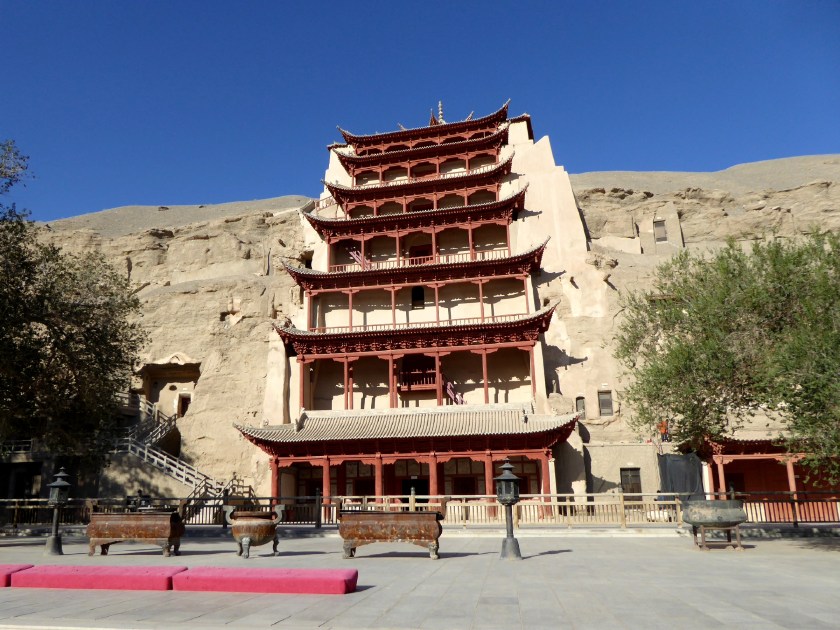
Mogao_Caves_Dunhuang_Gansu_China_敦煌_莫高窟_-_panoramio_(4)Hiroki Ogawa [CC BY (https://creativecommons.org/licenses/by/3.0)%5D

Located in western China, 200 plus miles west of Jiayuguan on the eastern edge of the Taklamakan Desert, Dunhuang was a nexus where merchants and traders from China and the west interacted with Buddhist pilgrims on the western edge of the Gobi desert. About 25 km southeast of Dunhuang lies an area known as the “Caves of a Thousand Buddhas” (千佛洞 Qiānfó Dòng). It is also called the “Mogao Grottos” (莫高窟Mògāo Kū). They are, in fact, a one mile stretch of nearly 500 caves which were burrowed into sandstone by 366 monks in the middle of nowhere about 1000 years ago.

In 1900, a Daoist monk by the name of Wang Yuan Lu (王圓籙Wáng Yuánlù),  discovered a hidden door in one of those caves (cave #17 aka the Library Cave) while doing some painting restoration work. Behind the mysterious door, Wang discovered nearly 50,000 ancient manuscripts, rare textiles, silk embroideries, and other artefacts dating back more than a millenium.

In 1907, Hungarian born British archaeologist Aurel Stein first arrived at the Mogao Grottos. A year later, Paul Pelliot, the French Sinologist and Orientalist followed. Between the two of them, they “purchased” thousands of manuscripts, paintings, embroideries, and other artefacts from Wang Yuan Lu which they sent back to museums in London and Paris. Russian and Japanese explorers and collectors followed close behind.

Stein and Pelliot were also followed by the likes of Langdon Warner of the Fogg Museum in Boston who (according to Dong Linfu) cut out pieces from twelve frescoes because he wanted to preserve Chinese culture and thought that the Chinese were “subhuman, uncivilized, and unable to appreciate their past culture.” Alan Priest followed Warner carving out fourteen pieces of a stone frieze and carrying away six heads of Buddhist statues bound for the Metropolitan Museum of Art. (from Dong, Linfu. Cross Culture and Faith: the Life and Work of James Mellon Menzies. University of Toronto Press, 2005.)

The Mogao caves were designated as a UNESCO World Heritage Site in 1987.

The Heart Sutra was one of the documents retrieved from the Mogao caves. It’s recent translation by Thich Nhat Hanh as “The Insight that Brings Us to the Other Shore” (2014) is licensed under a Creative Commons Attribution-Non Commercial 4.0 International License.

Avalokiteshvara, while practicing deeply with
the Insight that Brings Us to the Other Shore, suddenly discovered that
all of the five Skandhas are equally empty, and with this realisation
he overcame all Ill-being.

“Listen Sariputra, this Body itself is Emptiness
and Emptiness itself is this Body. This Body is not other than Emptiness and Emptiness is not other than this Body. The same is true of Feelings, Perceptions, Mental Formations, and Consciousness.

“Listen Sariputra, all phenomena bear the mark of Emptiness; their true nature is the nature of no Birth no Death, no Being no Non-being, no Defilement no Purity, no Increasing no Decreasing.

“That is why in Emptiness, Body, Feelings, Perceptions, Mental Formations and Consciousness are not separate self entities.

The Eighteen Realms of Phenomena which are the six Sense Organs, the six Sense Objects, and the six Consciousnesses are also not separate self entities.

The Twelve Links of Interdependent Arising and their Extinction are also not separate self entities.  Ill-being, the Causes of Ill-being, the End of Ill-being, the Path, insight and attainment, are also not separate self entities.

Whoever can see this no longer needs anything to attain.

Bodhisattvas who practice the Insight that Brings Us to the Other Shore see no more obstacles in their mind, and because there are no more obstacles in their mind, they can overcome all fear, destroy all wrong perceptions and realize Perfect Nirvana.

“All Buddhas in the past, present and future by practicing the Insight that Brings Us to the Other Shore are all capable of attaining Authentic and Perfect Enlightenment.

“Therefore Sariputra, it should be known that
the Insight that Brings Us to the Other Shore is a Great Mantra,
the most illuminating mantra, the highest mantra,
a mantra beyond compare, the True Wisdom that has the power
to put an end to all kinds of suffering. Therefore let us proclaim
a mantra to praise the Insight that Brings Us to the Other Shore:

Gate, Gate, Paragate, Parasamgate, Bodhi Svaha! Gate, Gate, Paragate, Parasamgate, Bodhi Svaha! Gate, Gate, Paragate, Parasamgate, Bodhi Svaha!” (completely gone to the further shore)


God in the Gobi

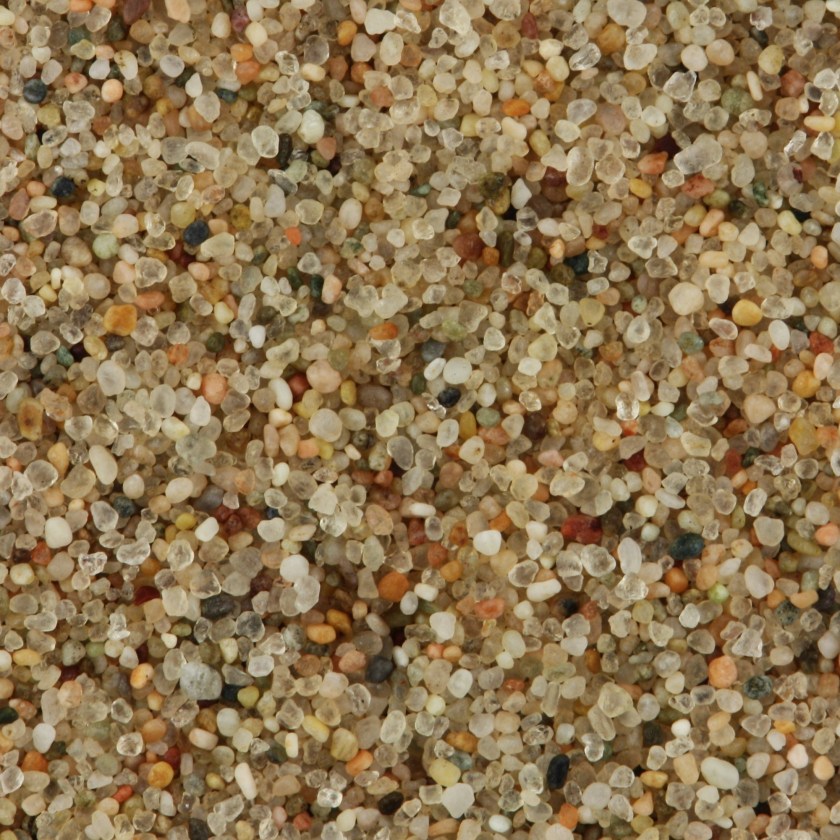
Sand_from_Gobi_DesertSiim Sepp [CC BY-SA 3.0 (https://creativecommons.org/licenses/by-sa/3.0)%5D

“’A place of desolation.’” murmured one of my companions.

I was fully aware of the acute terror with which the Chinese regard the Gobi regions, and I was determined to get a better understanding of the outlook from these men who lived on the very edge of the desert yet always turned away from it with a shudder and hurried toward the noisy clatter of the drill-ground and the barrack-room.

‘It is desolate,’ I said, ‘but in the silence and solitude God is still there.’”

So begins a travelogue unlike any I have heretofore encountered. The story of three women who, not once, but five times, traveled the entire length of the Gobi. For nearly 30 years, at the turn of the 20th century, “the trio”, sisters Eva and Francesca French, and Mildred Cable, were a part of the China Inland Mission, a Christian mission unaffiliated with any particular church or denomination which actively recruited both laypeople and single women into its service. Eva (Evangeline) French was a passionate woman whose upbringing in France and Switzerland in no way presaged who she was to become. Before converting to Christianity, Eva had described herself as “ “the fervid Nihilist, the incipient Communist, the embryonic Bolshevist.”

But when she finally did find her calling and faith, she embraced it fervently and signed on for a mission in China.  Eva was the first of “the trio” to arrive in China in 1893.  These were tumultuous times in the ‘middle kingdom’. The Empress Dowager Ci Xi was captain of a sinking marble boat that was the Qing Dynasty and Eva found herself in the middle of the Boxer Rebellion, not a healthy place for a foreign missionary in 1900. Reports came to Eva’s family that she had been killed by the Boxers and her mother fell into a depression she was never able to fully recover from, even after they discovered that the report of Eva’s death was erroneous. In 1908, Francesca joined her sister in China. At around the same time, Mildred Cable, an English woman who had grown up in a very strict religious family where she was constantly threatened by tales of God’s punishment to sinners, also answered “the call” she had felt as a young woman. Mildred Cable had planned to make that call with her fiancé, but he abandoned his plans to become a missionary and begged Mildred to stay. The decision to forsake marriage and to follow God into Boxer China, was never in doubt. Although she momentarily pined the loss of her love, serving others and spreading the gospel ultimately won out. The first person she met upon her arrival in China was Eva French.

When I stumbled into this amazing book, The Gobi Desert, I was immediately taken by the detailed descriptions of both the environment and the connections these women had been able to establish with the people they encountered. Unlike most missionaries, the French sisters and Cable adapted quite quickly to whatever environment they found themselves in. They learned to speak multiple Chinese dialects and lived their lives appreciating the same diet, wearing the same kinds of clothes, and living in the same kinds of homes as did the people they were serving. The more I read, the more I realized that they were not merely assuming these lifestyles out of duty, all three women seemed able to find satisfaction, joy, and beauty in their new surroundings and found value in and respect for both the people and the environments they encountered.

They were also dedicated to improving the lot of women in China. Not only did they want to train girls and women to carry on their missionary and evangelical work in China, they also wanted to introduce “Christian values” to illiterate Chinese peasant women by teaching young women science, the classics, literature, as well as addressing more difficult subjects such as foot-binding and infanticide. For more on this, read Jo Woolf’s article entitled “Mildred Cable, Eva and Francesca French” at  https://rsgsexplorers.com/2017/05/14/mildred-cable-eva-and-francesca-french/

What continued to both haunt me and draw me into this book were the descriptions of minutiae – those elements that surround us but most of us are blind to. Instead of describing the sand of the Gobi as hills or dunes, or even grains, their sand was more like that of William Blake’s Auguries of Innocence (“To see the World in a grain of sand, . . .”)

“Their flooring mainly consists of a wide expanse of sand or stone-littered plains, but a wealth of detailed variety hides itself under a superficial guise of monotony, and to the close observer each day’s march has a definite stamp of individuality.  By reason of their vivid and varied colorings, these stones are one of Gobi’s features of beauty, and sometimes the narrow, faint path passes through a litter of small multi-colored pebbles, which are rose-pink, pistachio-green, tender peach, lilac, white, sealing-wax-red and black burnished by sand, sun, and wind as though black-leaded, the whole, mixed with a quantity of orange-tinted cornelian, forming a matchless mosaic.” (from Cable, Mildred, and Francesca French. The Gobi Desert. Hodder and Stoughton, 1942.)

Chinese Odyssey 58

On bus, train, and foot,

traveling as we were able,

we followed God’s trio,

French sisters and Cable.

In the ’20s they lived

with peasants of Gobi,

saw God in sand grains,

mud homes like adobe.


Entering the Tiger’s Lair

Tiger_Cub

Keven Law [CC BY-SA 2.0 (https://creativecommons.org/licenses/by-sa/2.0)%5D

不入虎穴,焉得虎子 (bù rù hǔ xué, yān dé hǔ zǐ)  “To catch the tiger cub, one must enter the tiger’s lair.” Problem was, I found myself in the middle of the tiger’s lair, but I had no desire to catch a tiger cub. I was, however, enjoying my surroundings and was curious to know more. There’s another Chinese saying, 不到长城非好汉 (búdào chángchéng fēi hǎohàn).  “You can’t really call yourself a real man (hǎohàn) until you been to the Great Wall of China.” I’d been to the Great Wall, but I still didn’t feel that I’d earned my “hǎohàn” merit badge.

Not sure when the “tiger cub” idiom first appeared, but the best-known backstory centers on an historical figure by the name of Bān Chāo (班超) who hailed from Xianyang in the province of Shaanxi. He was both a military leader and a diplomat who lived in the Eastern Han dynasty during the first century A.D. The story goes that Bān Chāo, along with 36 subordinates, was on a diplomatic mission for the Eastern Han Emperor to visit the kingdom of Lóu Lán (楼兰) in the Tarim Basin, located in the present day Xinjiang Uygur Autonomous Region. He had been asked to cement a relationship with its king. When Bān Chāo arrived, he was given a warm reception and things were looking good. After a few days, however, things seemed to cool down. He learned that another delegation had arrived at about the same time as his. This much larger delegation were Xiongnu (匈奴), fierce warriors from northeastern China.  Bān Chāo knew the only real weapon he possessed at that moment was surprise. He sent 10 men to beat drums and start shouting. The rest of  Bān Chāo’s men lay in ambush and swiftly slew 30 of the Xiongnu soldiers, including the leader, whose head he severed. The remaining Xiongnu fled the kingdom erroneously believing that they had been attacked by a large Han force.  The next day, Bān Chāo presented the severed head of the Xiongnu leader to the King of Lóu Lán, and the Lóu Lán King decided to form an alliance with the Eastern Han. Bān Chāo had entered the tiger’s Lair and had successfully captured the tiger cub.

As I was writing this, a third idiom came to mind. Yue Guang(樂廣)invited a friend to a bar about a thousand years ago during the Jin Dynasty(晉朝). While tippling and staring into his cup, the friend appeared startled and suddenly left the bar. Wondering what had happened,  Yue Guang popped by his friend’s home later on to make sure he was OK.  “I thought I saw a snake swimming in my drink.” said his friend. “It really scared me so I came home.” Yue Guang was curious. He went back to the bar and sat at the same spot his friend had sat and drunk the same drink. Then he smiled. The snake his friend had seen, was, in fact, the reflection of a bow that was hanging on the wall. He quickly returned to his friend’s house and explained the illusion. . . and they went back to the bar and finished their drinks.

I knew I was no Bān Chāo. There have been a few times in China, however, when I have felt a little like Yue Guang’s friend,  where I may have possibly mistaken a snake for a bow  杯弓蛇影(bēi gōng shé yǐng.) The road back to Beijing reminded me of the snake in the cup, but my eyes closed and I drifted back into the tiger’s lair.

Chinese Odyssey 49

The road back to Beijing

was curvy and long

We spied an old lady,

but something seemed wrong.

She beckoned us over

and said that she knew

some secrets about me

and things I must do.


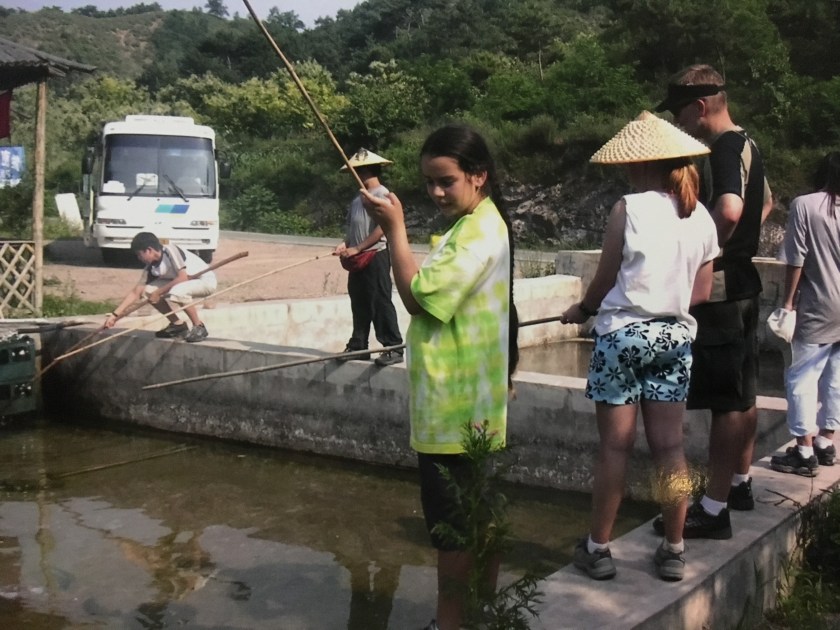
Fishing at the Great Wall

Fishing at the Great Wall

Walls in China pre-date the earliest historical dynasties. Built as enclosures, walls have been a part of every Chinese village and city for most of China’s history. Indeed the character chéng (城), depending on how it is used, can colloquially mean either wall or city. Beijing, Shanghai, and Nanjing all had walls surrounding them, long gone now. Today, you can rent a bicycle to ride the nearly 14 km perimeter on the top of the city wall of Xi’an, one of the few remaining city walls in China.

In his quest for immortality, Emperor Qin Shi Huang burned books and destroyed historical records so that Chinese history would recognize him as China’s first emperor. Some historians believe that the name “China” came from Qin (pronounced “chin”). It was this emperor who had over 6,000 life-sized terra cotta soldiers and horses made to protect him in the after-life. And, it was Emperor Qin, China’s most narcissistic ruler ever, who decided that he wanted to unite the already existing walls into a barrier wall that would protect all of China and keep the northern barbarian invaders from entering into his kingdom.

Stretching from Shanhaiguan (山海关区)  in Hebei Province, 270 km northeast of Tianjin, the Great Wall stretches about 2,250 km (1400 miles) across northern China to the final resting post, Jiayuguan (嘉峪关) in Gansu province. It varies in dimensions, but is nearly 10 meters tall (over 30 feet) in some places and is as wide as a single lane road on the top. It crosses deserts, steep mountain passes, and plains. Combining the lengths of all the tributary walls with that of the northern wall, it is estimated that the Great Wall stretches for nearly 8,000 km (5,000 miles) in length.

Only a fraction of the current Great Wall was initially connected together by Emperor Qin. Most of the Great Wall was built during the Ming Dynasty (1368-1644). The Ming Dynasty overthrew the Yuan Dynasty which had been ruled by the Mongolian people to the north. A large portion of the Great Wall was built to prevent another invasion from the Mongolian steppes. There is no way of ascertaining the human cost of building the wall. Historians believe that the number of people who died constructing the wall exceeds 1,000,000. Scientists all agree that there’s no way that a person could make out the Great Wall or any other man-made construction from the moon. And most military minds agree that a wall is an ineffective way of protecting a border.

That said, the Great Wall is impressive. And it’s crowded. Remember my formula for visiting Chinese sites. Walk for 10 minutes and the crowd diminishes by half; another 10 and it can be quiet; 30 minutes and you can be by yourself. Definitely the case for the Great Wall. All the sites are impressive. That’s why they were chosen in the first place. I think my favorite – so far – is the 10 km stretch of the ‘wild’ wall starting at Jinshanling (金山岭) and ending at Simatai (司马台). One used to be able to walk the entire stretch pretty much hassle free. In recent years, certain parts have been closed off for a variety of reasons. At the Simatai end, there used to be an amazing zip-line that would take you from the wall itself over a reservoir onto a platform right outside the tourist area of Simatai. Probably not the safest of Chinese tourist attractions, but maybe they’ve upped the standards. Sure was fun!

Outside the walls at Badaling (八达岭), Simatai (司马台),  and Mutianyu (慕田峪), there were fishing ponds where you could rent cane poles with hooks covered in balls of dough which you cast into small concrete fishing pools teaming with rainbow trout and salmon. After catching a trout, it would then be barbequed on a wood fire and served with local greens and a kind of cornbread. My Montana fly-fishing father is probably turning in his grave reading this, and it wasn’t much of a fishing experience, but the local people did know how to barbeque the fish and they were delicious.

Chinese Odyssey 48

Outside of Beijing

at the Jinshanling wall,

we scrambled and trekked

trying hard not to fall.

We slid down the zip line

into Si-Ma-Tai,

went fishing for trout

on the 4th of July.


Summer Palace 2.0 and other Beijing stories

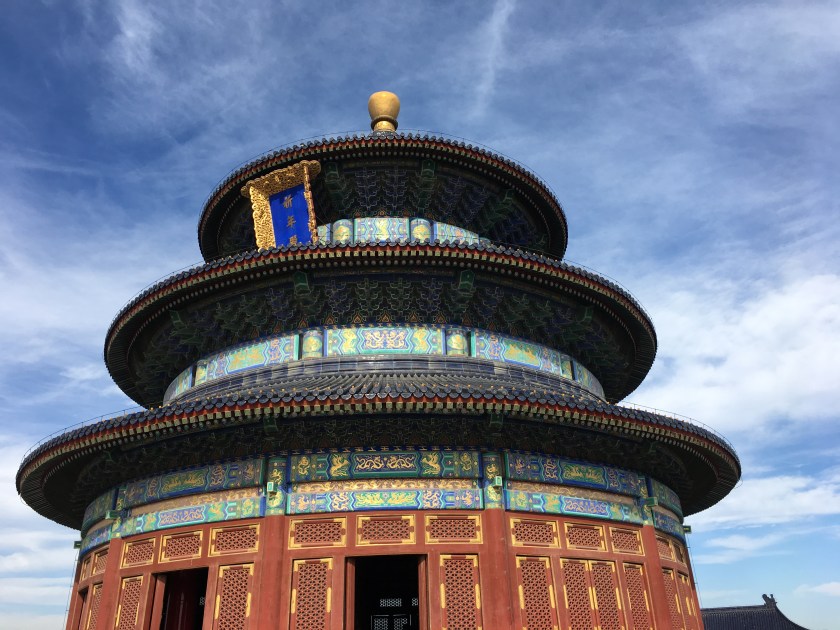
Temple of Heaven

Built in the early 15th century during the rule of Emperor Yong Le (永樂帝 Yǒnglè Dì), 3rd Emperor of the Ming Dynasty, the Temple of Heaven (天壇 Tiāntán) is internationally recognized as the symbol of Beijing.  The cobalt blue tiles which make up the roof of the Hall of Prayer for Good Harvests are earthly manifestations of heaven and the sky. The nail-less structure of the wooden building, supported by “dougong brackets” https://multimedia.scmp.com/culture/article/forbidden-city/architecture/chapter_02.html) further compel anyone who visits to celebrate this monument, and to wonder and to smile at its magnificence. Like beautiful mosques, amazing cathedrals, and temples of faith around the world, the Temple of Heaven aspires to be a conduit between heaven and earth. Emperors of both the Ming and the Qing Dynasty would visit the Temple of Heaven at least once a year to pray for good harvests. After briefly wresting power from Sun Yat-sen in 1913, the last imperial wannabe, Yuan Shi Kai visited the Temple of Heaven in 1914, in hopes of moving from provisional President of the newly established Republic of China to Emperor of a new Hongxian ( 洪憲) dynasty. He actually declared himself Emperor of China on January 1, 1916. Unfortunately for Yuan Shi Kai, neither heaven nor the masses smiled at this usurpation of power. 83 days into his rule, he abandoned his emperorship, and by June 1916, Yuan Shi-Kai succumbed to a natural death from uremia at age 56.

20 kilometers to the west of the Temple of Heaven lies another famous landmark in Beijing, the Summer Palace. Only about 3 kilometers square, once you’re inside the park it seems much larger than that. About three-quarters of the park is occupied by Kunming Lake.

During the reign of the Qing Dynasty Emperor Qianlong, the original natural lake was dredged and sculpted like the park itself. When I go to the Temple of Heaven, I like to walk around the lake. Like so many places in China, if you walk away from the center of the action, the crowd diminishes by about one half after ten minutes. Continue for another 10 minutes and it starts to feel quiet. 30 minutes out from the focus of main tourist areas in China, you can be by yourself. At the Summer Palace, there is the Long Corridor stretching along one side of Kunming Lake, hand painted from top to bottom with landscapes, temples, flowers, birds, musicians, and figures from China’s history, Suzhou Street with its Qing Dynasty like shops, the pagodas on Longevity Hill, and the Marble Boat that could never float. A connection that not everyone makes, however, is between the Summer Palace and the Dowager Empress Cixi. It was Cixi who actually renovated the already existing marble party boat using funds embezzled from the Chinese navy.

A “dowager” is a widow who assumes a title from her deceased husband. Although never technically China’s “empress”, the “Empress Dowager” aka 慈禧太后 Cíxǐ Tàihòu, assumed the mantle of leadership for nearly 50 years in China during the waning years of the Qing Dynasty (late 19th and early 20th centuries) as the “Empress Dowager Cixi.” Cixi was actually one of the many young imperial concubines of the Xianfeng Emperor (咸豐帝 Xiánfēngdì). Her son, Zaichun (載淳 Zǎichún) became the Tong Zhi Emperor (同治帝 Tóngzhìdì) from 1861-1875. Zaichun died of smallpox (or possibly syphilis) in 1875 leaving no male heir. Cixi then appointed his three-year-old cousin as successor in the new Guangxu (光緒) era and so, was able to continue her rule. The new emperor’s mother mysteriously died soon after, thus securing Cixi’s rule and continued dominance. As the Guangxu emperor grew up, although he was emperor by name, the Empress Dowager Cixi was the de facto ruler of China. In 1898, Cixi actually had the Emperor removed from power and imprisoned in the Hall of Jade Ripple (玉澜堂) in the Summer Palace, where he remained until his death at age 37, just one day before the death of Cixi in 1908. Cixi had already named Puyi, her two-year-old nephew, as the new (turned out to be “the last”) emperor of China.

A final note on the Summer Palace. The Summer Palace was where the Imperial Family would move to as a respite from the summer heat, and the walls of the Forbidden City. Even though the current “Summer Palace” was built in the early Qing Dynasty, until 1860, the real summer palace, Yuan Ming Yuan (圓 明 園; Yuánmíng Yuán), was a complex of a much grander scale and was only a short distance away from the current Summer Palace. It was actually known in Chinese as the “Imperial Garden” (御 園 Yù Yuán).  It contained extensive gardens and was replete with beautiful buildings as well as historical and artistic treasures. When I first visited the “old Summer Palace”, I erroneously assumed that the smashed up statues and destroyed buildings had fallen victim to the Cultural Revolution. That idea was quickly put to rest when our guide told us that this park had been destroyed by the French and the British. In 1860, after the 2nd Opium War, a small delegation made up of British and Indian troops was sent to meet and discuss the Qing surrender with Prince Yi (怡親王). While negotiations were going on, British and French troops took it upon themselves to do a little pillaging and plundering of the old Summer Palace. After it was learned that 20 members of that delegation had been tortured and killed by the Chinese, all hell broke loose. Lord Elgin, British High Commissioner to China, ordered the complete destruction of the Summer Palace. After three days, nearly 4,000 French and British soldiers had turned the summer palace into a war zone. Looted pieces of art that were not destroyed can still be seen in museums and in private collections around the world today.

A Chinese Odyssey 47

The Temple of Heaven’s

dome shone cobalt blue.

We stared at the sky

where dragon kites flew.

Sailed round Kunming Lake

In a grand marble boat

which the dowager empress

could never make float.


Cutting Edge Science ca. 1600

Beijing Astronomy

In today’s world, it’s difficult to imagine Catholic Jesuit priests introducing scientific principles and laws into China that would merge with China’s mathematics and engineering to transform Chinese understanding of astronomy. But hang on to your hats. These guys did just that! At the beginning of the 17th century, Matteo Ricci and other priests who followed in his footsteps were convinced that science would open wide the doors to Christianity in China.

The Board of Astronomy became an official part of the Chinese government during the Han Dynasty (right around the time of Christ). Even before that, there are records of Chinese noting celestial phenomena like solar and lunar eclipses and comets. But by the end of the Ming Dynasty, the study of astronomy was definitely on the decline in China. Enter the Jesuits.

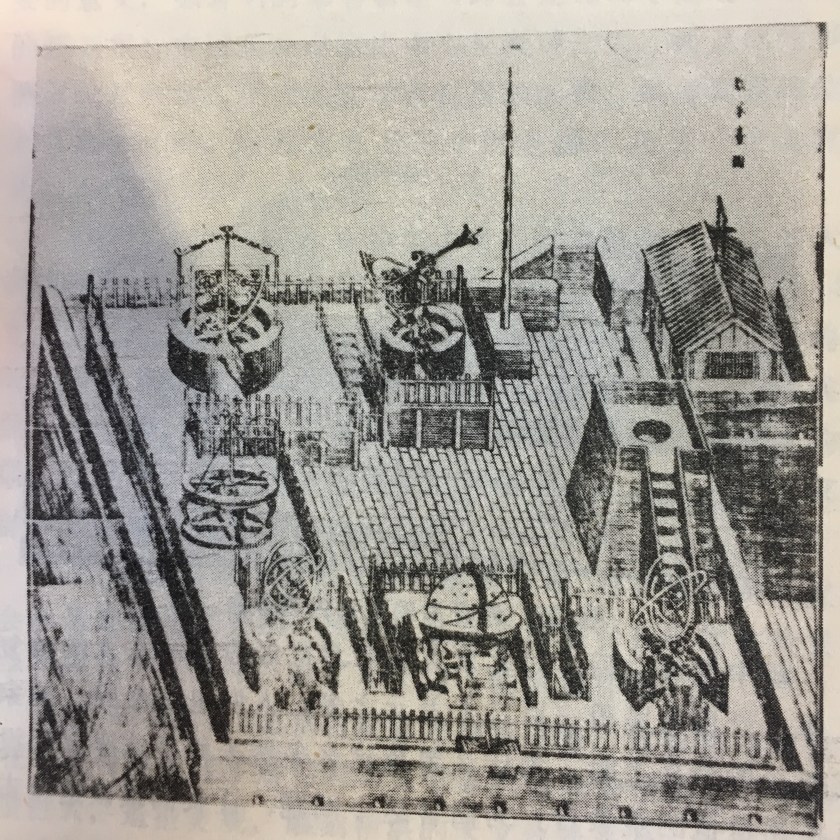
Matteo Ricci was not only a priest, but he was also a professor of mathematics whose own professor had been held in high esteem by Galileo. In 1601, upon arriving in Beijing, Ricci was granted an audience with the Emperor Wan Li and he offered his services to the Emperor. During a trip to Nanjing, he had discovered several large antique bronze astronomical instruments which nobody really understood, that had been created by the Chinese astronomer, mathematician, inventor, and engineer, Guo Shoujing (郭守敬) during the reign of Kublai Kahn in the Yuan Dynasty (13th century).

The very cool thing is that these instruments still can be found on the top of a small square building in Dongcheng Qu on Jian Wai Da Jie in Beijing. It’s called the Beijing Ancient Observatory (北京古象台 Běijīng Gǔ Guānxiàngtái.) The photo above is from an observatory pamphlet I picked up there in the ’90s.  I still don’t understand how any of these instruments work.

Not far from the observatory, there are hundreds of hutongs (胡同 hútòng). Hutongs are narrow alleys that have flowed through neighborhoods in Beijing since the Yuan Dynasty (13th century). Like so much of China, what was once a normal way of life has turned into quaint neighborhoods where tourists can rent airbnbs.  All the homes and shops are low-rise in the hutong neighborhoods. The houses have courtyards where families sit on stools and lounge chairs made out of bamboo slats. Birds sleep in wooden cages covered to keep them dark and crickets chirp in tiny bamboo cages being fed and trained for cricket fighting. Most people who live in hutong’s live where their parents lived and their parents before them. It’s said that the term, Hutong, actually comes from a Mongolian word meaning “water well”.

Not far from the hutongs is the Forbidden City, across the street from Tiananmen Square, and only a few blocks from Beijing’s first ever McDonalds. Through a contact in Hong Kong, a former student of mine from Australia managed to get an “internship” slinging burgers and running a cash register at what was once touted as the biggest McDonalds in the world. It could seat over 700 people. I wish I could have witnessed this tall white kid joking with his customers there. By the end of the summer, his Putonghua was better than mine. In 1996, this piece of Wangfujing real estate was determined to be too valuable for McD’s and is now the home of the Oriental Plaza.

Chinese Odyssey 46

We ate food from McDonald’s

near Tian An Men Square,

bicycled through hutongs

climbed Drum Tower stairs.

Saw celestial globes

made by Jesuit priests

for the Emperor Kangxi’s

astronomical feasts.


Beijing, Peking, Peiping, Yanjing, Dadu – what’s in a name?

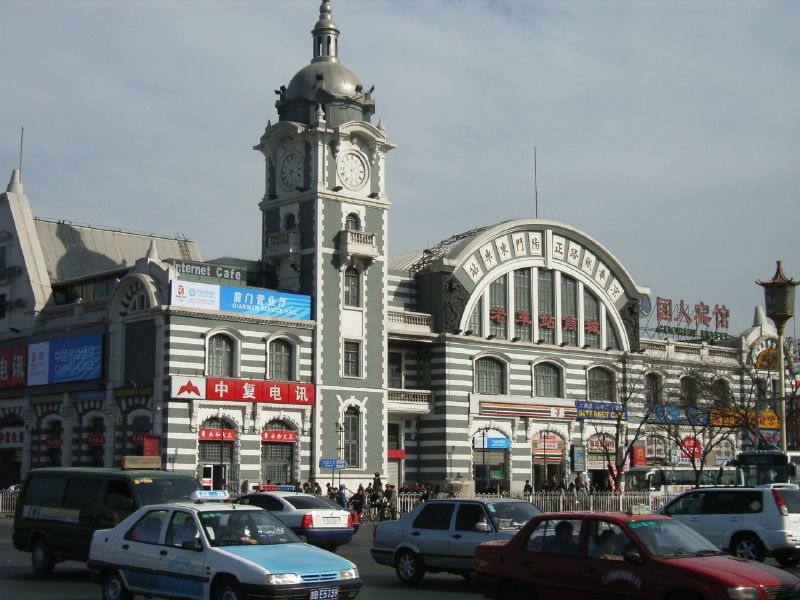
Beijing_Old_Railway_Station

Gene Zhang [CC BY 2.0 (https://creativecommons.org/licenses/by/2.0)]

My first trip from Beijing to Tianjin took over three hours on a slow-moving passenger train. Today, one can get from Beijing South Railway Station to Tianjin Railway Station on the Beijing-Tianjin High-Speed Train in 30 minutes.

There was a vibrancy in the air when we stepped off of the train at the Beijing Station 北京站 Běijīngzhàn on a hot July day in 1982. The grey, blue, and green colors of day faded softly into the concrete and stone buildings and bridges and the air of China’s capital city. Moving like a snail in a Didi Chuxing car (China’s Uber), it’s hard to imagine many of these same streets packed chock-a-block with bicycles. There still seem to be bunches (not billions) of bikes in Beijing, but most of them are shared bikes. And an increasing number of shared bikes are broken bikes. Bikes no longer own the road, cars do.

So many things taken for granted a few decades ago are a shadow of what they used to be. Barbers had spots on the street and at sidewalk intersections in the parks. It’s said that one can still find old men at Yùyuāntán Park 玉渊潭公园 who will trim your hair for a few yuan. And in the early morning, men walking their birds and Taiqi “boxers” have been joined by practioners of Qigong, a variety of wǔ shù (武术) martial arts, badminton players, gymnasts, and ballroom dancers.

Beijing lawmakers banned bāozi (包子) and jettisoned jiānbǐng (煎饼) when they made the Haidian hawkers close down shop. Baozi is the quintessential northern comfort food. It’s a fist-sized wheat flour pastry filled with meat and/or vegetables and then steamed. Jianbing is more difficult to describe. It’s made with flour (millet or wheat), thickness somewhere between a crepe and a dosa. After the flour mixture is poured and spread onto the large, round cast iron pan, it becomes the “bing”. Add an egg (or two) by spooning or brushing it onto the bing. Then a generous sprinkling of green onions and a pinch of salt; some sweet bean paste; a shake or two of sugar; maybe a little baste of hot pepper sauce aka là jiāo jiàng (辣椒酱).  On top of all of that spread a few shards of guǒ bì (馃箅), that crispy fried dough that goes on top of everything else. Then roll it up like a big burrito, fold it in two, cut it in half, and put into a paper or plastic bag. Beijing breakfast.

I heard the street food’s also gone in Xidan and Sanlitun. Is there still someone selling green onion cakes aka cōng yóubǐng 葱油饼 outside of the Temple of the Azure Clouds in Xiangshan? Thank God for Wangfujing. Rumor has it, the night market is still going strong. I’m sure they still have the amazing Xinjiang kebabs (串儿Chuànr) and sugar coated haw fruit aka tánghúlu 糖葫芦 . It’s been a few years, but I’m heading up to Beijing next week. Guess I get to see for myself.

Chinese Odyssey 45

Three hours from Tianjin

to the heart of Beijing.

There were vendors on bikes

hawking fresh congyoubing.

Haircuts on the corners,

men walking their birds,

Sword Taiqi at daybreak

not saying a word.


A Belt and Road Primer

2000px-One-belt-one-road.svg.png        wikimedia.org/wiki/File:One-belt-one-road.svg
The late 19th and early 20th centuries were not China’s finest hour. From one of the most powerful nations in the world, it had become a decaying relic of its former greatness. Europeans, Japanese, and Americans tried hard to make places like Tianjin reflect their own cultures. Sometimes I wonder as I stroll along the Bund in Shanghai or Yingkou Road in the former British Concession in Tianjin where Harry Liu lived, how Chinese feel about these relics of the past. Do they mourn the loss of iconic foreign architecture from the Concession Era, or do they welcome the distinctly modern creations by Chinese architects?

For many foreigners looking at China, it’s easy to get stuck in the past, be it 15 years ago leading students up China’s east coast, or 2,500 years ago, when Confucius, Laozi, and Gautama Buddha (OK Gautama Buddha was India) walked this Earth at the same time. Or to remember the Ancient Silk road which spread not only goods but Chinese culture across western Asia into Europe.

But most people in today’s China don’t live in the past. They live in a very future driven present.

Tianjin is the closest port to Beijing.  Located on the Bohai Sea, it has been a northern center for foreign trade in China since the Qing Dynasty, and today stands as the opening northern port of China’s 21st Century Maritime Silk Road, meeting up near Tianjin with the Eastern Land Silk Road, both a part of the “Belt and Road”, which is probably the most important 21st century economic initiative in the world today.

The “Belt and Road Initiative” aka “One Belt, One Road 一路 aka the “Silk Road Economic Belt and the 21st-century Maritime Silk Road 丝绸之路经济带和21海上丝绸之路was first unveiled to the world by President Xi Jinping in October 2013 in Kazakhstan. A few weeks later, Premier Li Keqiang promulgated China’s vision to  “help promote the economic prosperity of the countries along the Belt and Road and regional economic cooperation, strengthen exchanges and mutual learning between different civilizations, and promote world peace and development.”

We would be very naïve to think that altruism plays much of a role at all in the multi-trillion dollar Belt and Road Initiative. It’s designed to make it easier for the world to trade with China. At a national level, China would like to lessen gaps between the underdeveloped hinterlands and rust belt with the wealthier coast of China, and, by upscaling China’s status as a global leader, further enhance pride and love for the Mother Country.  At an international level, they would like to create new markets for China; to allow easier access to raw materials which China will continue to need; to find ways to reuse and repurpose surplus goods, equipment, and factories as China repositions itself as a more eco-friendly producer and manufacturer of goods; to create future customers for some of its new technological innovations AND to further develop its posture and position as a global economic leader.

The Belt is not a single path; it is actually six land corridors all starting in China:

1) The first corridor extends into Mongolia and Russia.

2) The second from China through to Europe. It’s now possible to go from China to London by railroad. In mid-March 2019, Italy announced that it would join the Belt and Road Initiative, becoming the first European country to sign on.

3) China-Central & West Asia Corridor make up the third corridor; the Central Asia-China gas pipeline, linking China with the Caspian Sea is up and running.

4) In the Pakistan Corridor China has helped build seaports, highways and high-speed railways.

5) There is a China-Bangladesh-India-Myanmar Corridor.

6) The final corridor is the China-Indochina Corridor. In Cambodia, between 65 and 80% of all the energy projects across the board are Chinese invested, built, or owned.

The Road refers to a maritime sea route extending from China through Indonesia, India, East Africa,  Egypt, into the Mediterranean – and which might very well extend west to South America in the not-too-distant future.

Some things to think about

  1. China has a unique requirement that it must be involved in all of the building of the projects it supports.
  2. Seven of the top ten global contractors are Chinese.
  3. The “Belt and Road” has been a big hit with the less democratic countries; In recent history, countries have often had to meet strict ethical standards when setting up global partnerships, but China, for the most part, does not require those kinds of ethical conditions be met:
    1. China has already signed agreements with Belarus, Azerbaijan, Saudi Arabia, and Thailand.
    2. China has been quietly developing economic connections with Afghanistan, Ukraine, Yemen, and Iraq.
  4. BRI is a risky plan involving several countries who may have a difficult time paying China back. In 2017, China signed a 99 year deal with Sri Lanka giving China control of the port they helped build. China also has a 40-year lease on the strategic Gwadar Port in Pakistan.
  5. There is a theory that China is trying to establish a chain of naval bases (“a string of pearls”) that will allow it to guard shipping routes where China has interests, thus giving it some strategic benefits.

For more in-depth reading, check out the Lowy Foundation “Understanding China’s Belt and Road Initiative” by Peter Cai https://www.lowyinstitute.org/publications/understanding-belt-and-road-initiative

Chinese Odyssey 44

Before Liberation,

Tianjin had “Concessions”

Europeans, US, Japanese

claimed possessions

The Astor Hotel 

housed the Emperor Pu Yi

There was Keisslings for borscht

for baozi, Gou Bu Li


“They called me Harry Jeep”

Harry Liu and Peter 2

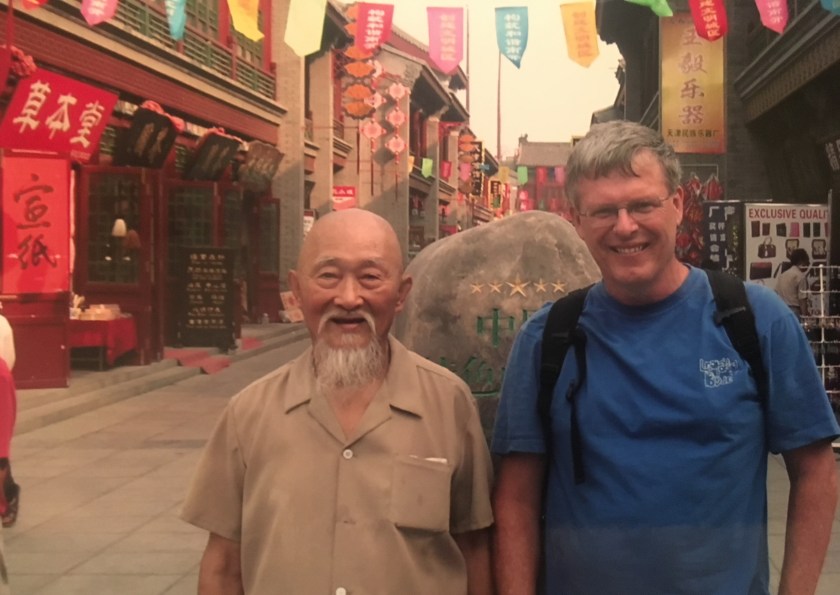
I first went to Tianjin to see an old friend from Taiwan who was teaching there. Jeff took me to meet a buddy of his who sold paintings and porcelain on Ancient Culture Street. Enter, Harry Liu. Originally from Shanghai, Harry Liu studied at Tientsin Anglo-Chinese College in the early 1940s with Eric Liddell (remember “Chariots of Fire”?) After graduating, Harry went on to study and complete his medical degree in the Japanese and German program at Beijing University. But largely because of a part-time post-war job, Harry never got to practice medicine. Somehow, he had been co-opted by the American Marines in Tianjin where his Scottish accented English changed into that kind of hybrid English found among English speakers today who live between America and the UK.  In addition to speaking Putonghua, German, and Japanese, Harry also spoke Cantonese, Shanghainese, and a smattering of European Romance languages. Harry loved America – or, at least the idea of it. Two things I would often take Harry were Whitman’s Chocolate Samplers and American 20th-century non-fiction books about China. Harry’s work as a Jeep driver and general lackey for the American marines post-WW2 earned him both his nickname, “Harry Jeep”, and a protracted period of reeducation from the “real teachers” in China during the early days of the revolution – the workers and the peasants. Harry loved Kiessling’s Café  (起士林饭店 Qǐshìlín Fàndiàn) a German-Austrian bakery and restaurant renowned for its fine European cuisine. I remember taking Harry there in the late 1990s and treating him to a couple of his favorite dishes that he hadn’t eaten since the 1940s. For years after that,  whenever I would lead a group to Beijing, we would invariably detour to Tianjin where Harry would walk us through the European concessions and regale us with stories of his life in Tianjin.  We would often take kids to 狗不理包子(Gǒubulǐ Bāozi), a 200-year-old local favorite whose name defies translation, but it’s something like “Dogs don’t pay attention steamed buns.” Harry Liu passed away in 2010 at the age of 86, never having fulfilled his lifelong dream to visit America.

Although it is one of 4 municipalities in China (the other three being Beijing, Shanghai, and Chongqing), and has been a prominent trading port in China since the 13th century, most  people outside of China know very little about this “Shanghai of the North.” After the French and British gunboats attacked Tianjin and forced the Treaty of Tianjin in 1858, opium was made legal, and foreign trade was opened wide.  Following the British and the French into Tianjin were the Germans, the Japanese, the Austrians, the Italians, the Belgians, and the Russians.  There was also a sizable American population there.  The “Concessions” (公共租界 Gōnggòng Zūjiè) were physical “settlements” in Tianjin, Shanghai and several other cities which were ceded by the Chinese to European countries, the USA, and Japan. Tianjin had eight foreign concessions. Each concession had its own schools, hospitals, stores, prisons, and restaurants.

The flower of the British Concession was the Astor Hotel (利顺德大饭店), located next door to British built Victoria Park. It was the prime address for diplomats and social functions among the international upper crust in Tianjin in the late 19th and early 20th centuries. Ulysses S. Grant stayed there in the 1870s. The American consulate in Tianjin was located in the Astor until 1929, and Herbert Hoover stayed there numerous times before he became 31st President of the United States. Pu Yi, China’s last emperor called the Astor his home for many years after abdicating in 1910 and before becoming the puppet ruler of Manchuria during the Japanese occupation. Starting as a single level hotel, by 1924 it had built up to three levels and later added an eight-story wing with one of China’s first American Otis elevators. Today, the newer portion has been refurbished while portions of the old Astor retain their former Old World décor, memorabilia, and furnishings. The Astor remains one of Tianjin’s finest luxury hotels.

I ran across this interesting description of Tianjin in Isabelle Maynard’s book,  China Dreams: Growing up Jewish in Tientsin: She wrote “Not until I was living in the safety of America did I realize that the land where I was born and raised would now be as inaccessible to me as Russia was to my father. It was then that the dreams began. Tientsin dreams of growing up; of joys and sorrows; of boyfriends and girlfriends; of blood red mimosas in Victoria Park, cerulean blue quilted rickshaw covers, yellow soft-as-powder sands of Pei-tai-ho Beach; of the silvery bridge joining the French and Italian concessions; of murky green water of the Hai-Ho Canal; of white signs that said, ‘No dogs or Chinese allowed’; and of the blackness into which war had plunged us.”

Now, less than an hour from cosmopolitan Beijing by fast train, Tianjin retains both the charm and a feeling of “renqingwei” (warmth and hospitality) that I had not encountered since leaving Taiwan.

Chinese Odyssey 43

Ending up in Tianjin

with my friend, “Harry Jeep”.

An amazing old man

selling art on the street.

Eric Liddell, his teacher

M.D. from Bei Da

worked for US Marines,

unforgivable flaw.