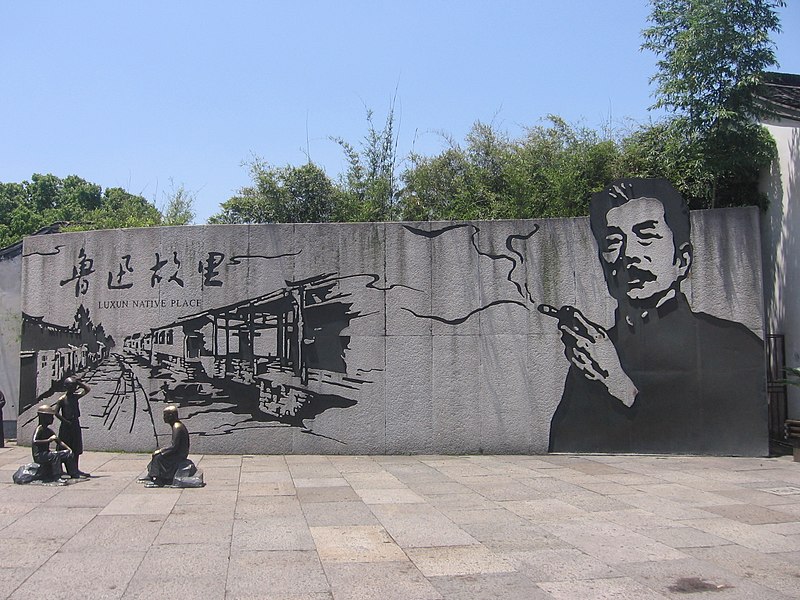
Lu Xun – China’s Greatest early 20th Century Author

Lu Xun Native PlaceZhou Guanhuai [CC BY-SA 4.0 (https://creativecommons.org/licenses/by-sa/4.0)%5D, from Wikimedia Commons

What was it about Lu Xun’s writing that led Mao Ze Dong to call him the “commander of China’s Cultural Revolution“?

Although Lu Xun  (迅 Lǔ Xùn) aka Lu Hsun – had a formal education, he was much more interested in the stories he heard from uneducated peasants than in the great works of literature. Born in 1881, he was 38 when the 1919 May 4th movement championed writing in the vernacular “白话” instead of in classical Chinese (文言文). Lu Xun opened windows into the lives of uneducated peasants, of women who were branded by superstitions and beliefs which relegated them to roles of shame and dishonor they could never hope to climb out of. His writings were not hopeful. They were often dark and desperate and were an honest reflection of the lives of vast numbers of Chinese lǎo bǎi xìng 老百姓 (common people) during the early part of the 20th century. His most popular works were his short stories. Many are available on-line and I’ll mention three which I have read and believe would be a good introduction to Lu Xun.

Probably, the most iconic Lu Xun story is “The True Story of Ah-Q”.  Nobody knew what Ah-Q’s name really was or where he came from. It is evident from the beginning though, that Ah-Q is a loser – in everything he tries. He has no family. His only claim to fame is that the handi-work he does around town to pay for his food and drink seems to be acceptable. He is a blowhard, a braggart and a drunk, all of which bring on more ridicule and bullying from the townspeople. Ah Q represented much of China’s peasant population in the tragedy of his life, and the reader can’t help but feel that his lot was not his fault.

In the story, “Medicine”, a peasant couple whose son is dying of tuberculosis spend their last penny on steamed bread soaked in the blood of an executed criminal. The story was a powerful scream aimed directly at the ignorance which was burdening the masses. Ironic that Lu Xun himself would die at the age of 55 from the same disease.

“New Years Sacrifice” was one of the saddest stories I read. It was an almost voyeuristic glimpse at the lives of widows who were blamed for their own bad fortune both in this life and in the next. After being forced to remarry, Xiang Lin’s wife found herself pregnant and for the briefest of moments was happy with the son she bore until tragedy visited her again in the form of a wolf.

So much of what Lu Xun wrote was a commentary on the superstitions that enveloped China during the chaos of China’s Republican period. Maybe the reason that Lu Xun became Mao’s revolutionary poster boy was that he died in 1936. Mao Zedong, along with 4,000 stalwarts had completed the two year, 6,000 mile Long March which cemented his position as the undisputed leader of the revolution only one year earlier. The revolution was still young and those who died in its name were heroes. Although Lu Xun never joined the Communist Party, Mao understood Lu Xun to be someone who appreciated the plight of the peasants and was trying through his writing to help them rise up.

“The True Story of Ah-Q” (阿Q正传) and “The New Year’s Sacrifice”(祝福)  are both available in the Public Domain to read in English.

Chinese Odyssey 28

Xiamen had been open

for less than a year.

The colors were drab

but the air was quite clear.

Lu Xun used to write

in the Nan Putuo temple

and the Gulangyu

musical island felt gentle.

The British Colony of Hong Kong

600px-Flag_of_Hong_Kong_(1959–1997).svg

No one who ever landed at Hong Kong’s Kai Tak airport in the heart of Kowloon ever forgot the experience. There are tons of photos from planes landing that captured clothes hanging outside windows and on balconies of Kowloon high rises and some passengers claimed they could watch TV shows through the doors open behind the balconies. There was only one short runway built on “reclaimed land” in Victoria Harbour just south of Kwun Tung.  Some say that the reason there were never any serious mishaps were that pilots were just too scared coming in.

June is a muggy month in Hong Kong. Coming off a 15 hour flight from Los Angeles, we stepped into a steam bath of exhaustion and energy. A part of all of us just wanted a shower and a bed, but another part wanted to drop our stuff off and explore. Air conditioning wasn’t as ubiquitous then as it is now in Hong Kong so heat and jet-lag won out and it was on to the New World Hotel. For many of our kids, jet lag was a new experience. After all, it was sixteen hours earlier in Tulsa than it was in Hong Kong and none of our bodies or minds knew quite what to make of that.

In the early 1980’s, Hong Kong harbour was wider. Kellett Island, home of the Hong Kong Yacht Club, was not yet a part of Hong Kong Island. There was no peninsula where the Hong Kong Convention Center now resides. The first cross harbor tunnel had only opened 10 years earlier. The Fleet Club at Fenwick Pier had a McDonalds sitting right on the harbour where American sailors passing by could stop off and have a draft beer. The Star Ferry terminal sat next door to the main post office in Central. And one could have tea on the first floor of the Peninsula Hotel with and unobstructed view of Hong Kong harbour. They call what’s happened in Hong Kong harbour “land reclammation,” but I always wondered how land that was never land before could have been reclaimed.

Those were the days of really cheap public transportation. Double decker trams cost 10 cents for an hour long ride from Shaukeiwan to Western District. The Peak Tram was still going strong ever since opening up in the 1890’s. Taxi’s dropped their flags at $2. The Star Ferry cost 10 cents for the lower deck and 20 cents for the upper and there were always rickshaw drivers standing right outside to run you in, around, and through Central. For some reason, Morning Star was the ferry every kid wanted to ride. Anybody smoked whenever and wherever they wanted, and that included on all forms of transportation.

Hong Kong has always had the best Dim Sum in the world and it didn’t disappoint. Our kids from Tulsa had their first taste of Cha Shao Bao 叉烧包, Siu Mai 燒賣, Har Gao 蝦餃, Chicken Feet 鳯爪, Spring Rolls 春捲, Turnip Cakes 蘿蔔糕, Spareribs with Black Beans 豉汁蒸排骨 – which were just the tip of the iceberg. And all washed down with Jasmine 茉莉花茶 or Pu-Erh aka Polay 普洱 tea. And they did it the old fashioned way.  Food carts weaving among tables, stopping whenever anyone asked, placing the saucer sized plates and mini-bamboo baskets filled with Ma Lai Gao 馬來糕 or the steel plates with covers heaped with Changfen 腸粉 (shrimp, beef, or barbeque pork). At the end of the meal, the cost was tabulated by the number of plates on the table (most plates costing less than one US dollar). The literal translation of “dim sum” is “a little bit of heart”. Whenever and wherever I eat dim sum today it always takes me back to Hong Kong. Maybe it really is a  little bit of heart.

Chinese Odyssey 26

Thirty-one hours later,

touched down in Hong Kong

stepped into a steam bath

but moved right along.

We rode the Star Ferry

looked dapper and chic

ate dim sum, drank Po-lay

and trammed to the Peak.

When Oklahoma said “Ni hao”

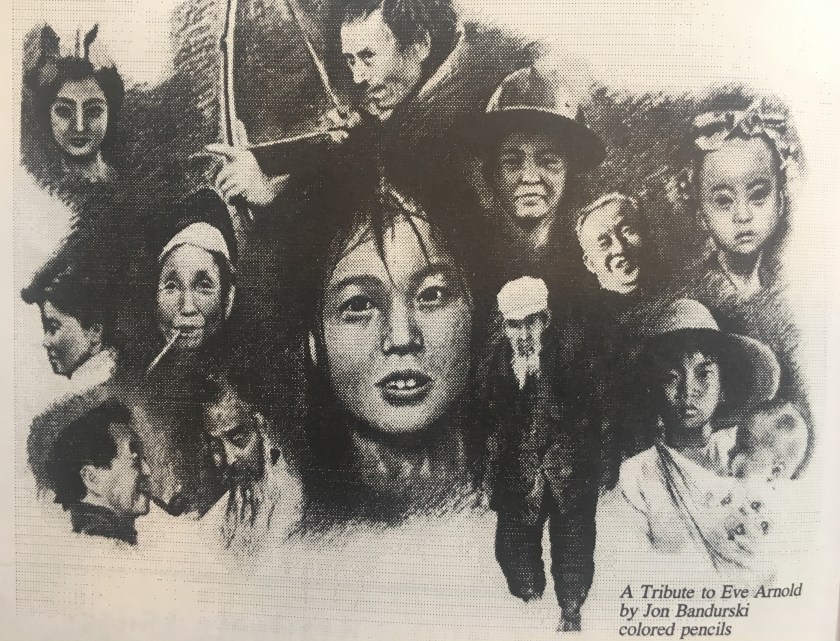
Jon Bandurski Drawing copyAccording the The Oklahoma Historical Society, the Chinese were the first Asians to settle in Oklahoma. Soon after the 1889 Land Run, a Chinese entrepreneur set up the Tom Sing Laundry in Guthrie (near Oklahoma City). Other laundries and restaurants followed. The 1940 census showed only 110 Chinese living in Oklahoma. By 1980 that number had increased to 2,461. (https://www.okhistory.org/publications/enc/entry.php?entry=AS006).
The 1980’s was a good decade for improved connections between Oklahoma and China.

  • In 1980, Tulsa established a “Sister City” agreement with Kaohsiung in Taiwan.
  • In 1980, Booker T. Washington High School and G.W. Carver Middle School offered Mandarin Chinese as a part of our foreign language curriculum in Tulsa.  At B.T. Washington, we published the “American Express” 美國快報, which later became the “Chinese American Express” 美中快報, a student newsletter which invited  young students of Chinese from all over America to contribute their experiences and perspectives regarding the learning of Chinese.
  • In 1981, I accompanied six high school students and a news crew from KJRH in Tulsa to Xiamen University, in southern Fujian Province where we spent 8 weeks studying Chinese. Xiamen had only been open to foreigners for one year at that time. KJRH won a Peabody Award (along with Hill Street Blues) for their documentary, “Project China.”
  • In 1985, Oklahoma and Gansu Province became “Sister States.”
  • In 1987, Tulsa established a “Sister City” agreement with Beihai in the Guangxi Zhuang Autonomous Region in China.
  • Later, that year, the Tulsa Global Alliance put together “Operation Breakthrough: China’s Middle America Initiative” in Tulsa where former President Gerald Ford was a Keynote speaker and Chinese scholar and interpreter, Perry Link, exposed Oklahomans to Chinese comedy in the form of Cross Talks. 100 Chinese governors, mayors and business leaders from 14 provinces and cities met and set up business deals with entrepreneurs from Oklahoma and middle America.
  • In 1989, 15 year old Booker T. Washington high school sophomore, Jon Bandurski became the first Tulsa Public School student ever to live for six months with a Chinese family in Shekou, near Shenzhen in southeastern China (near Hong Kong) where he studied Chinese and art for six months at Yucai School. Jon was the best unofficial ambassador the United States ever sent to China. When he wasn’t studying, he played soccer for the school team and even DJ’d for a school radio program.

Chinese Odyssey 25

It was in Oklahoma,

kids learning Chinese

thought they should go, too.

They even said, “Please!”

From a high school in Tulsa

six students departed

on a life-changing trip

destinations, uncharted


Rapprochement


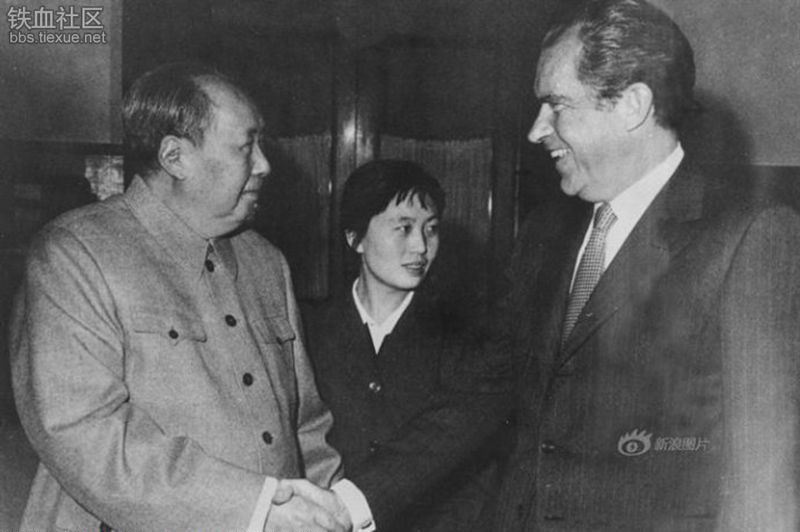
Mao_Zedong,_Zhang_Yufeng_et_Richard_NixonBy White House Photo Office (1969 – 1974) (White House Photo Office (1969 – 1974) [Public domain], via Wikimedia Commons
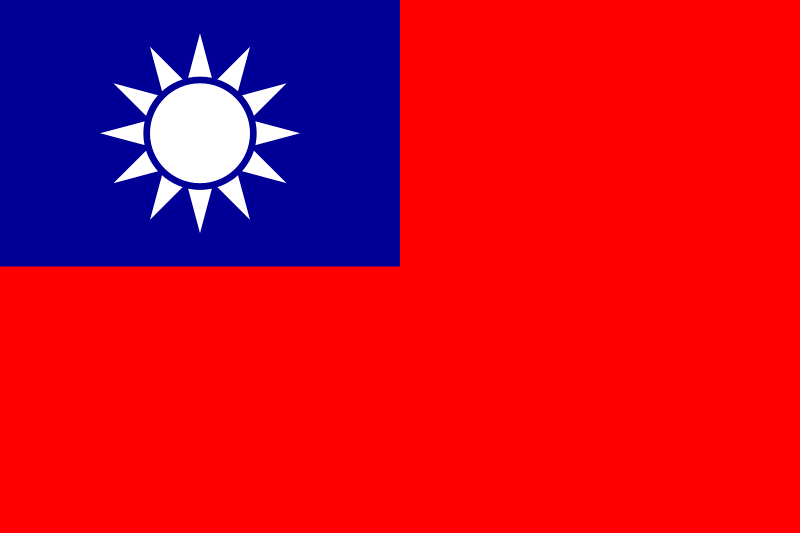
In October, 1971, the United Nations recognized the Peoples Republic of China as the official representative government of China – and Taiwan was expelled.

Just a few months prior to that, the American ping pong team had been invited to China. This was the beginning of “ping-pong diplomacy,” which was soon followed up by Henry Kissinger taking a circuitous route through Pakistan to China to pave the way for President Richard Milhaus Nixon to travel to Beijing in 1972, where he met with Chairman Mao and Premier Zhou En Lai. From that trip, came the “Shanghai Communiqué,”  where both China and the United States agreed that there is only one China and that Taiwan is a part of China. Although, the United States clearly asserted that it wanted a peaceful resolution to the “Taiwan Issue,”  President Nixon also made it clear that he was not in favor of “Taiwan independence.”

Following their meeting, unofficial Liaison Offices were set up in both Beijing and Washington D.C. in 1973 while Taiwan continued to have it’s Chinese Embassy in Washington D.C. until it morphed into the Coordination Council for North American Affairs in 1979. Today, it is goes under the name, the Taipei Economic and Cultural Representative Office in the United States.

In Viet Nam, the Paris Peace Accords, officially called the Agreement on Ending the War and Restoring Peace in Vietnam, was signed by representatives of the USA and Vietnam on January 27, 1973, but the war did not really end until the fall of Saigon in April of 1975.

In China, the Cultural Revolution officially ended in 1976 when the “Gang of 4” (四人幫Sì Rén Bāng) – which included Mao Zedong’s wife, 江青 Jiāng Qīng aka Madame Mao – were all tried and sent to prison only months after Mao’s death. Shortly after Mao died, Deng Xiaoping (邓小平 Dèng Xiǎopíng), a different kind of  revolutionary leader emerged who understood that China needed to change in ways very different from those of Mao and that meant not only serious reforms in China’s economic policies, but the breaking down of the “bamboo curtain” and an opening of China to the world.

It was Polish-American National Security Advisor, Zbigniew Brzezinski who served under  President Jimmy Carter, chief negotiator Leonard Woodcock, and Deng Xiaoping, the Paramount Leader of China  who crafted the agreement that would formalize diplomatic relations between China and the USA in 1978. In this agreement, the USA reaffirmed the “one China policy” and declared that Taiwan was a part of China. The USA also insisted that it be allowed to “maintain cultural, commericial, and other unofficial relations with the people of Taiwan.” The official “denormalization” announcement came on January 1, 1979. The Armed Force Radio Taiwan (renamed ICRT in 1979), the English radio station in Taiwan, suggested that Americans living in Taiwan should probably stay close to home for the next couple of days. To those of us living in Taiwan then, it came as a shock. Nobody knew quite how to react, so life pretty much carried on with very few incidents.

Chinese Odyssey 24

Instead, “Made in China”

was on every thing

from toys and clothing,

to music and rings.

China opened its doors

and we were invited;

the flame which had smoldered

had been re-ignited.


“One Country, Two Systems” – The 1984 Joint Declaration

800px-Deng_Thatcher_2
By Brücke-Osteuropa [Public domain], from Wikimedia Commons
Hong Kong people have never been in control of Hong Kong’s destiny.  I don’t believe  they felt the British colonial government was repressive. Rather, there was a laissez-faire attitude embraced by Chinese and expatriots alike living in Hong Kong at that time. It wasn’t until the 1984 Sino-British Joint Declaration announced  “One Country, Two Systems,” that local Hong Kong people actually began to consider that they might become active participants in the government and the politics of Hong Kong.

Prior to the the 1842 Treaty of Nanking, Hong Kong was mostly a fishing and farming port. The cession of Hong Kong Island to the British “in perpetuity” was the icing on the cake for the British in what China still refers to as the “Unequal Treaties” after the 1st Opium War. Unable to keep up with the demands for silver, which was the only “currency” China would accept for the vast amounts of tea the English public was consuming, England, through the British East India Tea company, came up with a scheme for another kind of currency. Opium. Although opium was illegal to import into China at the time, it had definitely found a market among the overworked and impoverished Chinese masses. Since trading opium was against the law in China, the British East India Company used private traders to take their contraband from Bengal in India to China starting in the late 18th  century. By 1842, China was hooked. The British didn’t act alone in their opium trade with China. Other European countries, and the USA joined in to get a piece of the opium action.

As a result of the 1842 Treaty of Nanking, Hong Kong Island was ceded to the British “forever”. A portion of Kowloon was added at the 1860 Treaty of Peking. The British were not, however, able to get the same deal for the remainder of Kowloon nor for the New Territories, from the Dowager Empress Cixi in 1898. Their 99 year leases would be up for renewal in 1997. The British had set up a colonial government whose senior ranks were mostly held by the British. Democracy was never a high priority among the British in Hong Kong. The British didn’t believe the Chinese were capable of running Hong Kong. It wasn’t until the British “recovered” Hong Kong from the Japanese after World War II that Governor Mark Young proposed the Young Plan in 1946,  in a first attempt to give Hong Kong a representative democracy. This plan was quashed in 1952 by Young’s successor, Alexander Grantham. But the clock was ticking ever closer to 1997 and the fate of Hong Kong after that was very much up in the air. In 1979, Hong Kong Governor Murray Macelhose brought up the future of Hong Kong in an unofficial meeting with Deng Xiaoping. No clear direction could be determined from that meeting. Hong Kong might remain as it had been under British control, or it might revert back to China. In the 1982 meeting between Deng Xiaoping and Margaret Thatcher however, Senior Leader Deng gave a very clear mandate to Prime Minister Thatcher. All of Hong Kong would come back under Chinese control in 1997. The 1842 Treaty of Nanking was the only real bargaining chip that the British held to negotiate a good deal for the British. For the first time in the history of Hong Kong, a new question began to be floated? What would be best for the future of the people of Hong Kong?

The concept of “One Country, Two Systems” was proposed by Deng Xiaoping during negotiations with Margaret Thatcher in 1982. Even though Hong Kong would come back into the Chinese fold as a Special Administrative region, it would be able to keep its current system of capitalism and “a high degree of autonomy” for the next fifty years. Deng saw this to be the future of not only Hong Kong, but also of Macau, and hopefully, Taiwan. Hong Kong would have control of its own domestic affairs, but China would be responsible for diplomatic relations involving other countries and Hong Kong would benefit from China’s national defense.

Like all agreements, however, some things were left up to interpretation. Chief among these was, what was meant by a “high degree of autonomy?”

Chinese Odyssey 18

Great Britain and China

Must find  a foundation

so life could go on

with no great alteration

“One Country, Two Systems”

was what they decided.

A plan leaving Hong Kong

a region divided.

The Bamboo Curtain

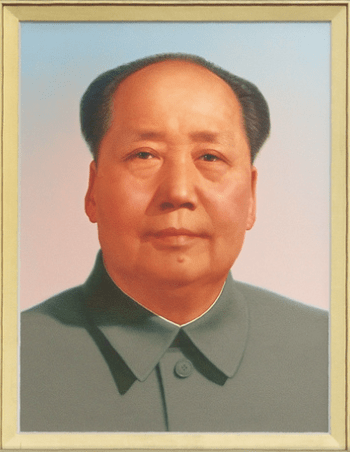
Mao Ze Dong

There never was a real “bamboo curtain,”  just like there wasn’t a real “iron curtain.” Whereas, most people understood the iron curtain to be the metaphorical border that divided Europe after WW2 into the “free world” and the “communist world,” the term “bamboo curtain” was used to describe that same border separating “communist China” from “free Asia”. But “bamboo curtain” never really became a part of the popular venacular during the 1970’s.  For Americans wishing to visit China during that era, however, it was every bit as unbreachable a wall. Although Richard Nixon had opened the door to a changing relationship between the two nations, it wasn’t until 1979 that America set up diplomatic relations with China and American students began trickling into mainland China. I have vivid memories of traveling through Hong Kong in 1979 and taking a train with the poet, William Howard Cohen. We rode the train to the end of the line to look at mainland China from a hill near Lowu. I remember feeling sorry for the hard working communist farmers in the fields below.

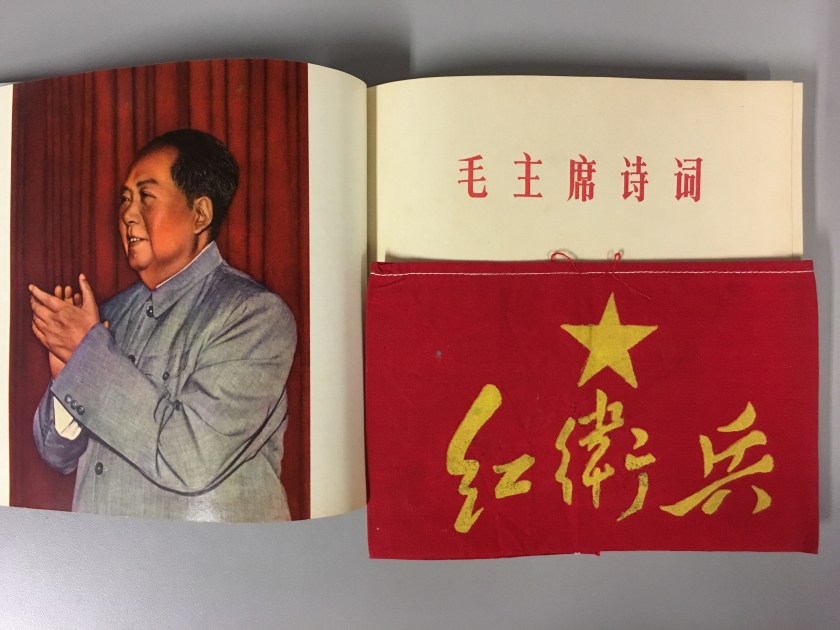
We were all pretty ignorant of China at that time. Remembering the propoganda magazines and English tracts of Mao’s Little Red Book (毛主席语录 Máo Zhǔxí Yǔlù) and White Haired Girl (白毛女 Bái Máo Nǚ) I picked up in Vancouver in the early 70’s and the passages from the elementary children’s textbooks in Taiwan lambasting mainlanders as Communist Bandits 共匪 gòngfěi , it’s no wonder most foreigners remained ignorant of China. Most of us were totally unaware of the “Great Proletarian Cultural Revolution” (无产阶级文化大革命 wúchǎn jiējí wénhuà dà gémìng) rampaging through China destroying young and old alike. Communism was always more of a vision than a plan.  Still the Red Guard believed that by destroying the old, they would enable the new, and that by relegating university professors to working the fields and having uneducated peasants become their teachers, China would emerge glorious and victorious. But it didn’t. It would take years to recover and evolve into China’s current “Socialism with Chinese Characteristics.”

Unlike the iron curtain which toppled, the bamboo curtain opened on its own volition. When the US normalized relations with Beijing 30 years after it had established itself as the official government of China, America merely joined the ranks of the majority of countries of the world . The USA and China issue the Joint Communiqué on the Establishment of Diplomatic Relations, in which America agreed that there is only one China and that Taiwan is a part of China; China’s one concession is that America could continue to carry on an unofficial relationship with Taiwan.

Chinese Odyssey 17

 At that time ‘round China

was a big bamboo curtain.

No way to go in then

that was for certain.

So we stood by a fence,

at the edge of Hong Kong,

watching communists work.

It all seemed so wrong.

Republicans in China

800px-Flag_of_the_Republic_of_China.svg

When Americans see the word, “Republican”, we immediately think of a political party. There are Republicans, Democrats, and Independents. In this post, the term “Republicans” refers to the people who wanted to change China from a system ruled by emperors and their families to a “republican system” where elected representatives of the people controlled the government. Many historians call the period between 1911-1949 in China, the “Republican Period” since the official English name of China at that time was “The Republic of China”.

Before the Republican Period, China was ruled by a succession of dynasties.  Some dynasties, like the Han lasted for centuries. Others, like the Qin, only a few years.  What all dynasties had in common was that they were lead by emperors who ruled with a “mandate from Heaven”. In Chinese, the word for revolution (革命 gé mìng) literally means “removing the mandate”. When an emperor no longer had the” mandate from Heaven,” the dynasty was toppled and a new dynasty began.

The Qing 清 (aka Ch’ing or Manchu) Dynasty was the last imperial dynasty in China. A coalition of anti-Qing forces from both inside and outside of China culminated with the Wuchang Uprising in Hubei on October 10,1911, forcing Puyi (溥儀 Pǔ yí), the last emperor of China to abdicate his throne on February 12, 1912 at the ripe old age of six.

The Qing Dynasty began when the Manchurians defeated the Chinese Ming armies in 1644. At that time, Manchuria was not considered a part of China, so China felt that it had been occupied by a foreign power. Early emperors of the Qing were strong, but by the beginning of the 19th century, the Qing had begun to decline. The Opium Wars lead to an ever increasing European presence and the British acquiring a foothold in Hong Kong. Movements to resist the Qing included the Taiping Rebellion where a deluded failed scholar who thought he was the younger brother of Jesus Christ lead a rebellion where upwards of 20 million people died. The Boxer Rebellion, at the beginning of the 20th century, promised followers that China could rid itself of the scourge of foreign invaders who seemed to be dividing China up like a pie, and the infamous Empress Dowager built a marble party boat with money promised to the Chinese navy, all set the stage for revolution.

Dr. Sun Yat-sen 孫逸仙 SūnYìxiān (aka 孫中山 Sūn Zhōngshān) has often been referred to as the father of modern China. He is one of a small number of “modern” Chinese to still be revered in both Taiwan and in the People’s Republic of China.  Dr. Sun had a vision of a constitutional republic based on three principles: Democracy 民權 (mín quán), Nationalism 民族 (mín zú), and Welfare of the People 民生 (mín shēng). When the Qing forces were defeated, Sun Yat-sen became the provisional President of the new republic. Although Sun ruled for less than a year, his “3 principles of the people” continued to be the political backbone of the Republic of China.

The Republican period in China was a time of turmoil. In the beginning, “Warlords” with their own militaries both divided and controlled large portions of China. The Nationalist Party (國民黨 Guómíndǎng, aka Kuomintang or KMT) was made legitimate by Sun and ultimately recognized by his followers in 1919, and a young Generalissimo Chiang Kai Shek (aka 蔣介石 Jiǎng Jièshí, aka 蔣中正 Jiǎng Zhōngzhèng) was rapidly establishing himself as Sun Yat Sen’s successor and as the emerging leader of the KMT.

At the same time, a former librarian at Beijing University and primary school history teacher in Changsha, by the name of Mao Ze Dong (毛澤東 Máo Zé Dōng), joined the fledgling Chinese Communist Party. At the time of Sun’s death in 1925, the communists and nationalists seemed to be coexisting amicably, but in 1927, with the help of the infamous Green Gang, Chiang Kai-shek ordered a campaign in Shanghai where more than 5,000 Communists were killed. This and other similar communist purges continued until 1934 when tens of thousands of communist troops followed Mao and other communist leaders nearly 4,000 miles in the “Long March” from Fujian to Shaanxi, with Chiang Kai Shek and the KMT in hot pursuit.

Besides the ongoing civil war between the Communists and the Nationalists, China was also being invaded and occupied during this period of time by the Japanese. An incident in 1937 at the Marco Polo bridge just south of Beijing was the spark which would lead to the Japanese domination of much of eastern China, the Rape of Nanjing, and the eventual occupation of Hong Kong by the Japanese on Christmas day, 1941. Although the Allied troops in WW2 tried to get the Communists and the Nationalists to team up against the Japanese, this idea met with very little success. In one incident in Xi’An in 1936, the Communists actually kidnapped Chiang Kai Shek to force him to team up and fight against the Japanese.

With the retreat of the KMT to Taiwan in 1949, and the establishment of the People’s Republic of China, the Republic of China ceased to exist in mainland China.  The Republic of China is NOT the official name in English for China. The official name for China is The People’s Republic of China. However, the Republic of China remains the official name in English for Taiwan. To the rest of the world, it remains a conundrum.

Chinese Odyssey  9

I packed up my suitcase

and jumped on a plane.

It was off to Taiwan

and an ocean of rain.

Some called it “free China”

where KMT landed

soldiers from China

that Chiang had commanded


When Taiwan was China

Peter, Katie, Ana Sun Yat Sen - I played this venue copy

I began my studies of Chinese at the University of Montana – on a whim. As a student of the 60’s, the James Legge translation of The I Ching: The Book of Changes and translations of the Tang dynasty poets Li Bai, Tu Fu, and Han Shan by Arthur Waley, Kenneth Rexroth, and Gary Snyder were on my reading list. Chinese was cool. My first Chinese language teacher was Father John Wang, a Catholic Priest from Shandong province who was also head of the U of M Spanish department. We studied a chapter of John DeFrancis’ Beginning Chinese every week, and we finished the year by reading “The Lady in the Painting”(畫兒上的美人). By the end of my first year, I was hooked. I wanted to go to China. Unfortunately, for an American in the mid-1970’s, mainland China was not an option. Father Wang said, “No problem. Go to Taiwan.”

At that time I was working on a ranch on Horse Prairie, near Dillon, Montana to support my university studies and was thinking about picking up my first horse, a dun mare.  I checked prices on tickets to Taiwan and the cost of the horse, and the cost of a round trip ticket to Taiwan were about the same. So I did what any red-blooded American would have done. I flipped a coin. Taiwan won. Father Wang assured me that his brother (also a Catholic priest) would find me a job teaching English for 60 NT$ an hour (about $1.50 US) and living in Taiwan was cheap, so I said OK. I cut my hair, borrowed a corduroy coat from a friend, and was on my way.

America, at that time, recognized Taiwan as the “real” China. Chiang Kai-Shek was still President and Mandarin was called Guoyu (the national language). The Kuomintang (Nationalists or KMT) ruled with an iron fist – and the people in Taiwan seemed to really like Americans. One of my first impressions of the Chinese in Taiwan was how gracious and welcoming the people  were. Later, I found out that most Chinese had a similar opinion of people from Taiwan. An oft heard expression among Chinese was “台灣人的 人情味很濃 “ (Táiwān rén de rénqíngwèi hěn nóng) which literally means “the hospitality of the people from Taiwan is really thick.” It really meant, “People from Taiwan are really nice.”

The first people in Taiwan were, most likely, not Chinese. The indigenous people in Taiwan were Austronesian. Chinese have been settling in Taiwan for centuries, however. Most came from Fujian and the dialect of Chinese which was most common in Taiwan before the KMT came in 1949 was the southern Min dialect (also called Taiwanese), the same dialect which is spoken in Xiamen (Amoy), Fujian.  The Dutch occupied Taiwan for about 20 years in the mid-17th century. The Dutch called Taiwan “Ilha Formosa” (beautiful island). Taiwan is still referred to by many as “Formosa”.  China ceded Taiwan to the Japanese in the Treaty of Shimonoseki after losing the first Sino-Japanese War in 1895 during the waning years of the Qing Dynasty. Taiwan remained a part of Japan for 50 years until the end of WW2 when it was reunited with China. When I first went to Taiwan, I encountered quite a few old people who did not speak Guoyu. They only spoke the Taiwanese dialect of Chinese and Japanese.

On January 1, 1979, America joined a majority of nations by formally recognizing the People’s Republic of China as the legitimate government of China. The USA acknowledged that there was only one China and that Taiwan was a part of China. At the writing of this post, there are currently 17 countries (out of 193 member states of the United Nations) – plus the Holy See in the Vatican – who continue to have diplomatic relations with Taiwan.

Chinese Odyssey 8

I read something new

in those dots, strokes, and lines.

Gates will soon open,

just look for the signs

An island awaits you

with jungles and snakes.

Fly over the pole

then put on your brakes.

鄭和 Zhèng Hé –Explorer Extraodinaire

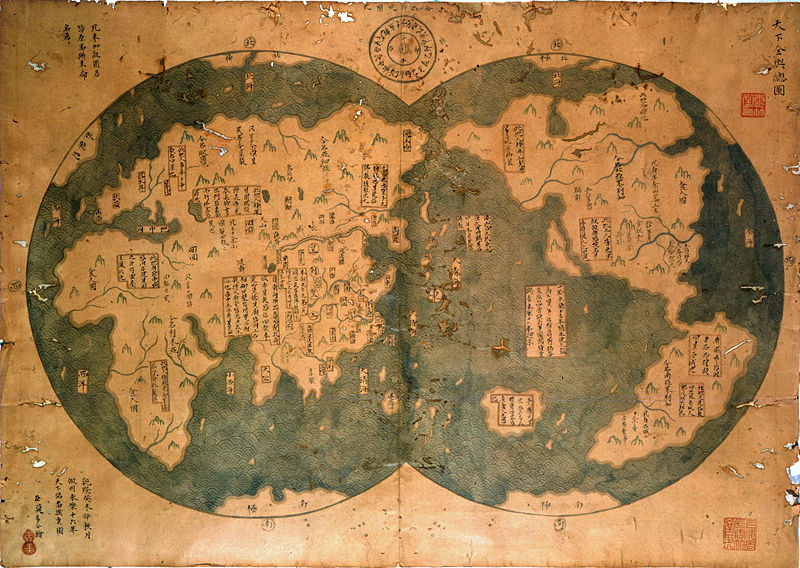
Zheng He Maphttps://commons.wikimedia.org/wiki/File:Zhenghemap.jpg

Growing up in the West, I learned that the 15th century was the “age of exploration”. I marvelled at the stories of Christopher Columbus, Fernando Magellan, and Vasco de Gama and imagined myself as a member of their crews. I devoured Robinson Crusoe, Gulliver’s Travels, and Homer’s Odyssey. It wasn’t until adulthood that I first discovered Zheng He (pronounced Jung Huh). When I began learning about him, the word “marvel” took on a whole new dimension.  It was like jumping from little leagues into the majors. Zheng He didn’t explore with a small fleet of ships like European explorers. He commanded an armada of over 200 ships and more than 25,000 men. His largest ship about the size of a  professional football pitch. The Santa Maria (Columbus’ flagship) on the other hand, was a mere 36 metres in length. I wonder what maps and other information about the rest the world Zheng He used when he and other explorers from different parts of the world explored their world during the “age of exploration”.

Born near Kunming, Yunnan in southwestern China into a Muslim family, Zheng He’s original name was Ma He. As a young boy, he was captured by soldiers of the Ming Dynasty. Like many boys of a similar age who were captured, Zheng He was castrated so he could serve the Ming Court and not pose a threat to the women of the imperial court. Not only did Zheng He became a loyal member of the Ming court, his outstanding service was rewarded by his being sent to Beijing  (then known as Beiping), where he gained favor with Zhu Di, the 4th son of the founder of the Ming Dynasty. Zhu Di later went on to become the Yong Le emperor. Ma He proved to be a great warrior and respected commander, and after fighting fiercely in several military campaigns for the Ming, he became a favorite of Yong Le. Emperor Yong Le showed him great honor by bestowing upon him the surname of Zheng. There are several stories as to the origin of the name, but my favorite is that “Zheng” was the name of Yong Le’s beloved horse who had been killed during a seige in Nanjing. Maybe since the “Ma” in Ma He’s name meant “horse”, Emperor Yong Le was honoring him by giving him the name of his favorite horse. At any rate, his new name, “Zheng He” was the name that stuck.

In his sea voyages, Admiral Zheng He, traveled south through what is now Indonesia, Malaysia, and the Philippines and west to India continuing south down the eastern coast of Africa. Five of Zheng He’s seven long voyages occurred during the reign of the Emperor, Yong Le. Some writers and historians believe that Zheng He could have sailed even well beyond Africa but evidence for that is a bit sketchy.

Chinese Odyssey  7

Years later while rummaging

through some old boxes

I heard a soft clink

amongst shorts, shirts, and soxes.

The jar, I remembered.

Inside was a map —

still cryptic, yet clearly

a beckoning trap.

Red China


Screen Shot 2018-07-31 at 1.28.45 PM

WW2 ended in 1945, but the civil war in China continued to rage. Although America and its allies supported Chiang Kai-Shek and the KMT (aka the “Nationalists”), Mao Zedong was definitely gaining headway among the Chinese masses. There were attempts made to broker a peace between the Communists and the Nationalists in 1945 Chongqing, but neither the Communists nor the KMT were willing to lay down their arms. By 1948, the Communists were clearly in control of the majority of China and in 1949, Chiang Kai-Shek asked America, the UK, France, and the USSR to intercede. But by then it was too late. On October 1, 1949, Mao Zedong declared the birth of the People’s Republic of China and two months later, on December 8, 1949, the KMT officially moved its government and nearly 2 million troops and support personnel from Chongqing in Sichuan, to Taipei, Taiwan. The purpose of this move was to regroup and the plan was to recapture the Chinese mainland from the communists with the help of America and other supportive allies. Of course, that never happened. There was never a peace treaty or an armistice signed between the Communists and the KMT. Taiwan continues to officially call itself the Republic of China  (https://www.taiwan.gov.tw/index.php).

In 1951, the USA became involved in the Korean conflict and fought against both the North Koreans and the Chinese in Korea. But aside from stationing US troops on the island of Taiwan, the US did little to assist the Republic of China (the English name for the “official government” of China) now hunkered down in Taiwan, in its goal to recover the mainland.

America, in the 1950’s was in the throes of the Cold War. Communists were our sworn enemies. The USSR (The Union of Soviet Socialist Republics) and the Peoples Republic of China were considered to be huge threats to the American way of life. The United States was also the biggest financial supporter of the French and the South Vietnamese during their struggle against Ho Chi Minh and the communist North Vietnamese. When the French decided to call it quits in 1954, the USA was left holding not only the financial weight of that war, but the belief was that Vietnam was a communist domino which America could not allow to fall. If Vietnam became communist, the commonly held idea was that Cambodia, Laos, and Burma would be quick to follow.

In actuality, the Peoples Republic of China was having a tough go of it in the 1950’s.  Their vision was of a communist China but what would that mean? For one thing, Mao declared that  women would hold up half of the sky (女人撑起半边天- Nǚrén chēng qǐ bànbiāntiān) Men and women would be equals. There would also be serious land reform. Large chunks of land were taken from the wealthy landlords and given to the peasants and many land owners were killed in the process. In the beginning, China tried to model itself after the USSR, but relations between these two huge communist superpowers began to deteriorate. Both human caused and natural disasters (sometimes a combination of the two) lead to the deaths of millions of  Chinese during the late 1950’s, but China had shut itself off to most of the rest of the world at that time, so the west knew very little of the suffering that was happening in Red China.

Although the color red is usually associated with good fortune in Chinese, during the 1950’s, the red in Red China referred to “Communist China” (the Peoples Republic of China) as opposed to “Free China” (the Republic of China aka Taiwan.)  In the same way that the USSR was separated from western Europe by the metaphorical “Iron Curtain”, Red China was separated from the free parts of Southeast Asia by a “Bamboo Curtain” which prevented the free world from seeing what was really happening in China.

Chinese Odyssey 5

The world was huge.

China could have been Mars.

Confucius and communists

chopsticks and stars

Chow mein and chop suey

both came from Chun King.

Fortune cookies were made

in a place called Peking.