Hong Kong is located in the southeastern part of China. It is surrounded by the province of Guangdong. Adjacent to Hong Kong to the northeast is the province of Fujian. Located in the southeastern part of Fujian is the city of Xiamen. The distance from Hong Kong to Xiamen is only about 300 miles, as the crow flies. Fujian is the Chinese province directly across from Taiwan, separated by the Taiwan Strait. Taiwan is about twice the distance from Fujian as Cuba is from the state of Florida. Today, if we want to travel from Hong Kong to Xiamen, we can choose to take a 40 minute flight or a 5 hour high speed train.
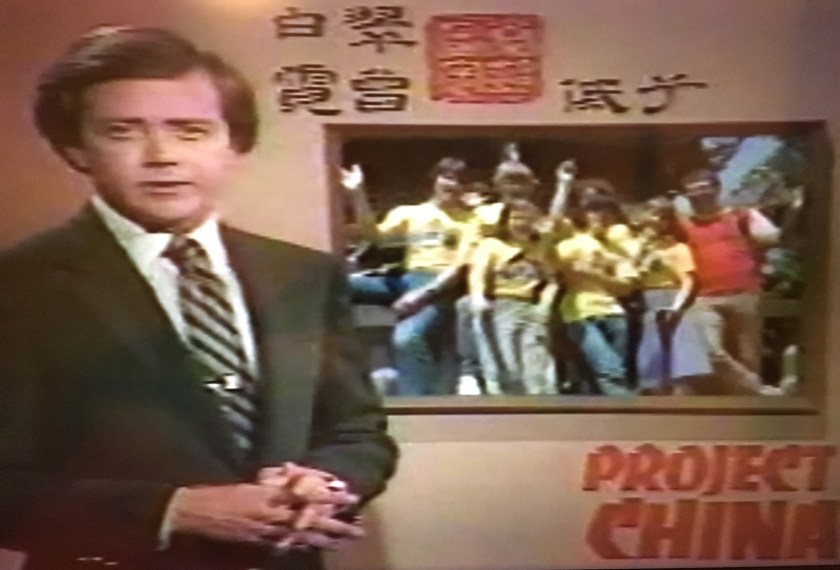
In June 1981, our only travel option was the Jimei passenger ship, the proverbial slow boat to China. From Hong Kong to Xiamen would take us 22 hours plus some change. Our six Tulsa high schoolers joined a rather odd assortment of 20+ individuals from all over the USA. Our kids were the youngest of the bunch. At 80 plus, Abe Gurvitz, a dentist from Boston shared the senior mantle with Frankie Wu from Prairie City, Kansas. We also had a smattering of missionaries, college students, and recent graduates along for the adventure. Accompanying us all was a news crew from Tulsa’s KJRH TV station. Reporter, Mark Nicks and cinematographer, John Ross were never far from our sides.
In earlier posts, we established that names for people, places, and things Chinese often have very different names, depending on their context. China is called Zhongguo in Chinese; Taiwan is also known as Formosa; Hong Kong is Xianggang in Mandarin (aka Putonghua); Macau is known by most Chinese as Aomen; Canton can refer to either the province of Guangdong or city of Guangzhou; Kongzi is the Chinese way of saying Confucius; Zheng Chenggong is what most Chinese call Koxinga; just to name a few. In today’s post, there are some really different names. Xiamen is still called Amoy by many and Quemoy is most often referred to as Jinmen (or sometimes Kinmen.) Both Amoy and Quemoy are names which sound closer to the names used by local inhabitants in their dialects.
Just before arriving in Xiamen, we passed by the island of Quemoy (Jinmen) which sits less than 2 miles off the coast of mainland China, where we were awed by a Taiwan (ROC) flag the size of a football field waving in the breeze (much to the chagrin of the PRC I’m sure.) Just a few years earlier, Quemoy and Amoy had traded progaganda laden missiles every other day. Landmines were strewn along the beaches to stop an invasion from the mainland. The island is latticed with tunnels. Nearly 100,000 KMT troops were stationed in Quemoy during the Cold War with over 500,000 missiles lobbed in 1958 alone. Intermittent shelling went on until 1978, just three years prior to our arrival. When we lived in Taiwan, I used to hear stories of Taiwanese soldiers swimming over to Xiamen on a dare to watch a movie in a local theatre and come back with a movie ticket stub. Friends of ours who served in the Taiwan military told us that was crazy. Still, it makes for a good story and I can’t help but wonder.
At the time we arrived, Xiamen had only been opened to foreigners for one year. The only other non-Chinese we saw there were an American teaching couple who had been living in Xiamen for 8 months. Our food was very local. Much of the produce was grown on campus. Fruits and vegetables were smallish and very unlike the perfectly shaped and equally sized produce that we were used to in American supermarkets. The good stuff got shipped to Hong Kong where it commanded a much higher price. Even Coca-Cola had yet to reach these hinterlands. It was water, tea, a sickly sweet orange soda, or . . . local beer. I had met with parents before leaving and had told them that beer was not illegal for their kids to consume in Xiamen and it might be safer and healthier than some of the other alternatives. Some parents signed off on that, so beer began to be served with our evening meal.
Today, things are a little different. Anyone can board a plane in Taiwan and fly to Jinmen. It’s even easier in China. In Xiamen, there is an hourly “Cross-Strait Ferry” from Xiamen to Jinmen which takes about one-half hour. You can only buy one-way tickets because tickets in Xiamen are sold in ¥RMB (Renminbi) and tickets sold in Jinmen are in $NT (new Taiwan dollars.)
Chinese Odyssey 27
Accompanying us
was a Tulsa news crew;
Oklahoma to Xiamen
turned into a coup.
On a boat called the Jimei —
Hong Kong to Amoy —
passed flags of two Chinas,
drank milk made of soy.
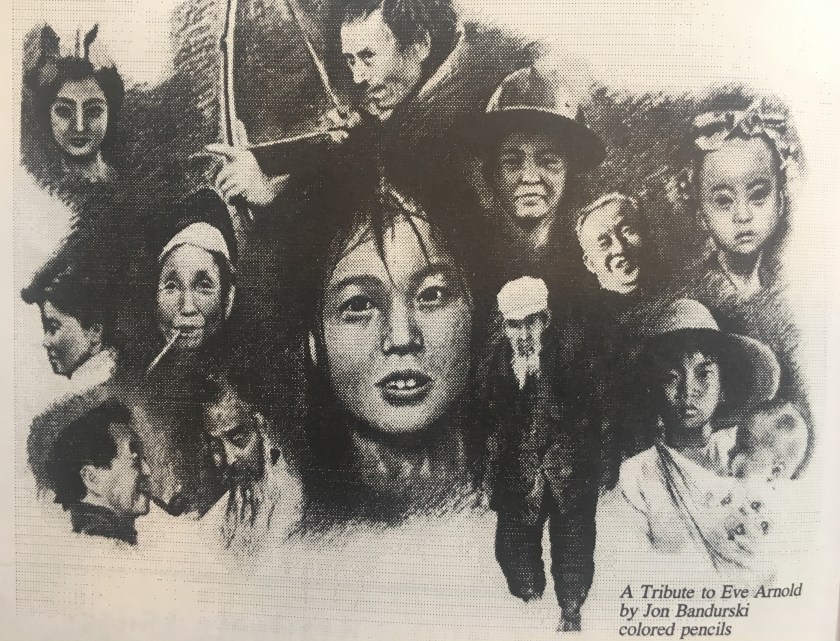 According the The Oklahoma Historical Society, the Chinese were the first Asians to settle in Oklahoma. Soon after the 1889 Land Run, a Chinese entrepreneur set up the Tom Sing Laundry in Guthrie (near Oklahoma City). Other laundries and restaurants followed. The 1940 census showed only 110 Chinese living in Oklahoma. By 1980 that number had increased to 2,461. (
 The Panda in the Room PD